

Introduction
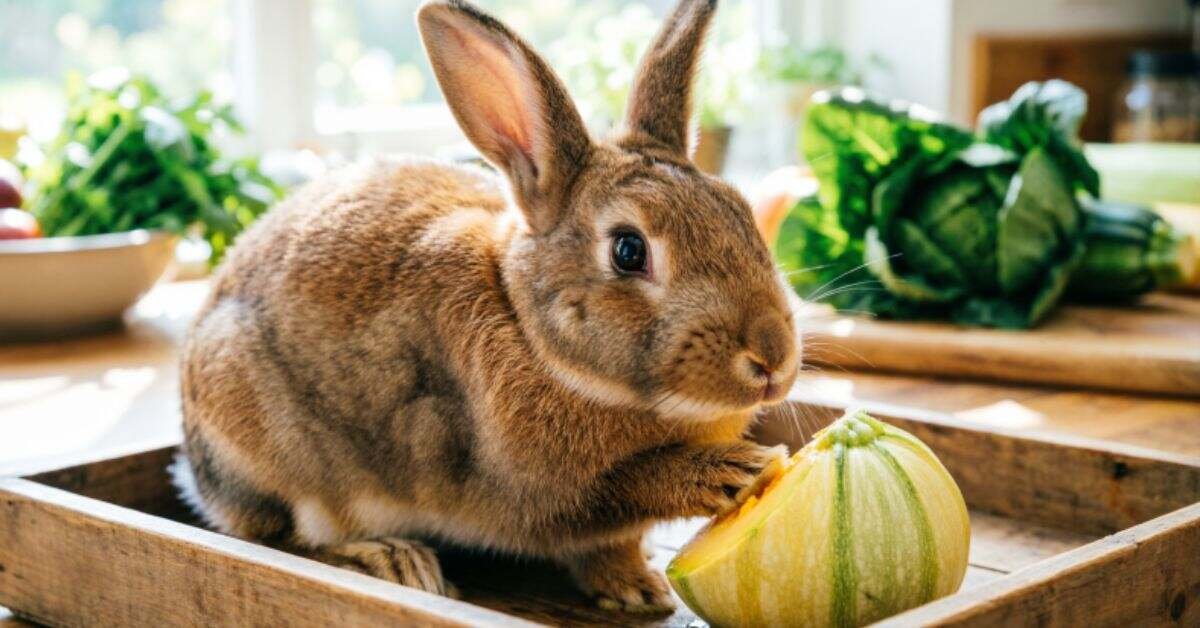
Squash is a type of vegetable that grows on vines. It comes in many types, such as zucchini, butternut, and pumpkin. Some squash has soft skin, while others have hard shells. Many people eat squash because it is full of vitamins and water. Pet owners often ask, can rabbits eat squash and is it safe for them.
Rabbits have very sensitive stomachs. Not every human food is good for them. Even healthy vegetables must be given in small amounts. This is why many people wonder, can rabbits eat squash or should it be avoided.
The truth is that some types of squash can be safe in small portions. It should only be an occasional treat, not a daily food. If you are still thinking, can rabbits eat squash, the answer depends on the type and the amount you feed. Hay and leafy greens should always stay the main part of your rabbit’s diet.
Can Rabbits Eat Squash?
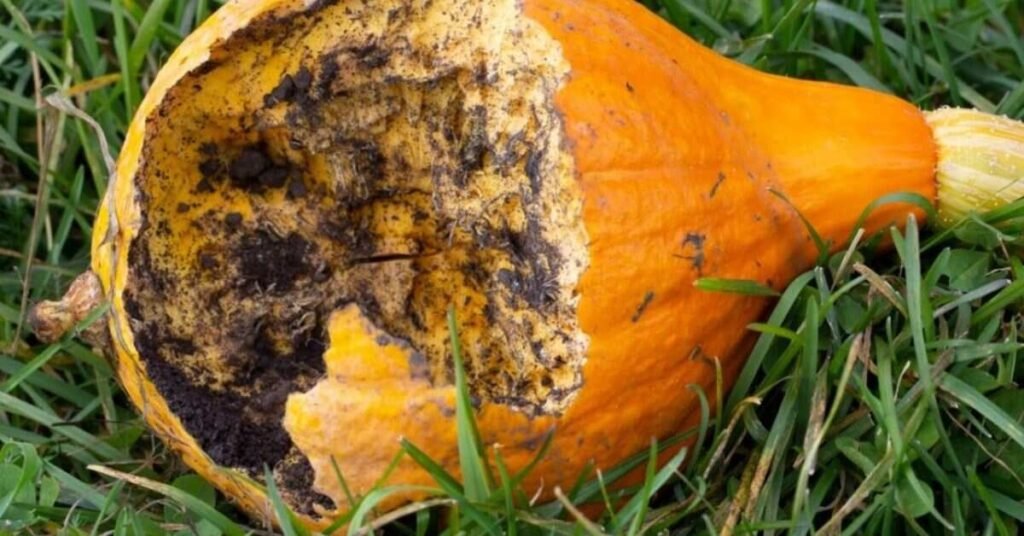
Yes, rabbits can eat squash in small amounts. Some types, like zucchini and butternut squash, are safe when served raw and fresh. Squash has vitamins and water, which can be good for your rabbit. However, it also has natural sugar, so it should only be given as a treat. Too much squash can upset your rabbit’s stomach.
Always introduce squash slowly and watch your rabbit’s reaction. Give a small piece and see how they handle it. If there are no signs of stomach problems, you can offer it once or twice a week. Remember, hay should always be the main part of your rabbit’s diet, with leafy greens and small treats on the side.
Is Squash Safe or Toxic for Rabbits?
Squash can be safe for rabbits if given the right way. Not all squash types are the same. Some are better than others. Squash should never replace hay. It should be fed in small amounts only. Too much squash can upset digestion.
Seeds and skin can cause problems. Hard seeds may be a choking risk. Thick skin is hard to chew. Cooked squash is not recommended. Raw squash is a better choice. Always introduce squash slowly and watch your rabbit.
| Squash Type | Safe for Rabbits | How Often to Feed | Portion Size | Main Risk | Safety Notes |
| Zucchini | Yes | 2–3 times/week | Few slices | Watery stools | Remove seeds |
| Yellow squash | Yes | 2–3 times/week | Few slices | Digestive upset | Raw only |
| Butternut squash | Limited | Occasionally | Small cube | High sugar | Peel skin |
| Acorn squash | Limited | Occasionally | Small cube | Starch | No seeds |
| Pumpkin | Limited | Rarely | 1–2 teaspoons | Constipation | Plain only |
| Squash seeds | No | Never | None | Choking | Unsafe |
| Squash skin | No | Never | None | Hard to digest | Unsafe |
| Cooked squash | No | Never | None | Gut stress | Unsafe |
| Canned pumpkin | No | Never | None | Added salt | Unsafe |
| Wild squash | No | Never | None | Unknown toxins | Unsafe |
Nutritional Value of Squash for Rabbits
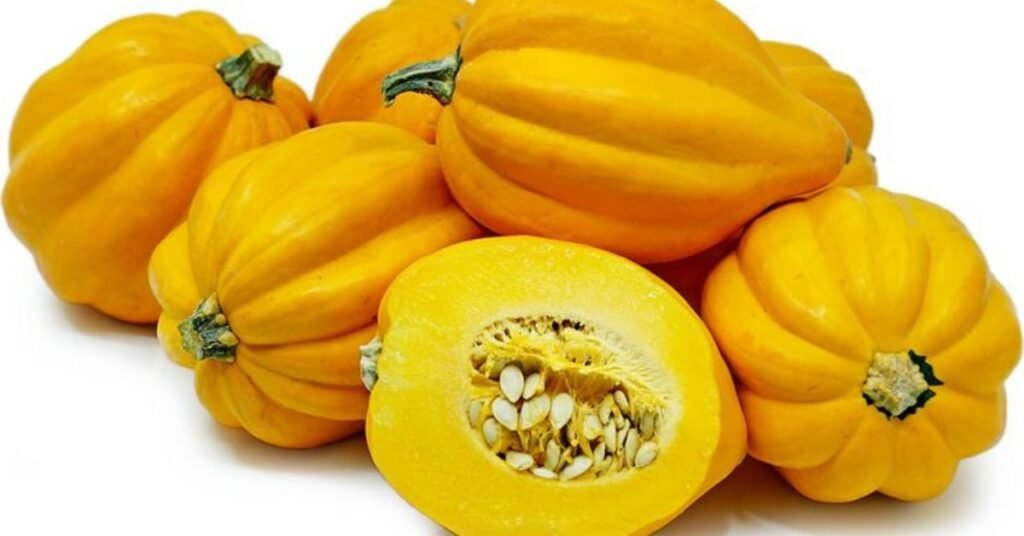
Squash is a soft vegetable that contains helpful nutrients. It is mostly made of water, which can keep your rabbit hydrated. It also provides vitamins that support the eyes, skin, and immune system. When served in small pieces, squash can be a light and healthy treat.
Still, squash is not a perfect food for rabbits. It has natural sugars that can cause stomach problems if given too often. Rabbits need a diet that is high in fiber, mainly from hay. Squash should only be an extra snack once in a while, not a daily meal.
Key nutrients in squash:
- Vitamin A for healthy eyes
- Vitamin C for immune support
- Potassium for muscle and nerve function
- Small amount of fiber for digestion
- High moisture content for hydration
Key Vitamins and Minerals in Squash
Squash contains some helpful vitamins and minerals. These nutrients support a rabbit’s body in small ways. Squash has vitamin A, which helps vision and skin. It also contains vitamin C for immune support. Water content in squash helps with hydration.
Squash should still be fed in small amounts. It is not a main food. Too much can cause digestive upset. Rabbits get most nutrients from hay and greens. Squash is best as an occasional add-on. Balance is always important.
| Nutrient | Found in Squash | Benefit for Rabbits | Amount Level | Feeding Note |
| Vitamin A | Yes | Eye and skin health | Medium | Feed in small amounts |
| Vitamin C | Yes | Immune support | Low | Not essential daily |
| Potassium | Yes | Muscle function | Medium | Occasional feeding |
| Water | High | Hydration | High | May soften stools |
| Fiber | Low | Digestion support | Low | Not a fiber source |
| Sugar | Medium | Energy | Medium | Limit portions |
| Calcium | Low | Bone health | Low | Greens are better |
| Iron | Low | Blood health | Low | Minor benefit |
| Magnesium | Low | Nerve function | Low | Small contribution |
| Antioxidants | Yes | Cell protection | Low | Treat food only |
Is Squash High in Sugar or Carbs?
Squash contains natural sugar and carbs. The amount depends on the type of squash. Soft summer squash has less sugar. Hard winter squash has more carbs. Rabbits can eat small amounts safely. Large portions can upset digestion.
Sugar and carbs should be limited in a rabbit’s diet. Too much can cause weight gain. It may also lead to soft stools. Hay and leafy greens are better daily foods. Squash works best as an occasional treat. Moderation keeps rabbits healthy.
| Squash Type | Sugar Level | Carb Level | Safe for Rabbits | Feeding Frequency | Portion Advice |
| Zucchini | Low | Low | Yes | 2–3 times/week | Few thin slices |
| Yellow squash | Low | Low | Yes | 2–3 times/week | Small pieces |
| Butternut squash | Medium | High | Limited | Occasionally | Small cube |
| Acorn squash | Medium | High | Limited | Occasionally | Small cube |
| Pumpkin | Low to medium | Medium | Limited | Rarely | 1–2 teaspoons |
| Spaghetti squash | Medium | Medium | Limited | Occasionally | Small amount |
| Raw squash | Varies | Varies | Yes (some types) | Limited | Always raw |
| Cooked squash | — | — | No | Never | Unsafe |
| Squash skin | — | — | No | Never | Hard to digest |
| Squash seeds | — | — | No | Never | Choking risk |
What Types of Squash Can Rabbits Eat?
Rabbits can eat some types of squash in small portions. Soft and mild varieties are usually safer. These types are easier to chew and digest. Always serve squash raw, fresh, and cut into small pieces. Introduce any new food slowly to avoid stomach problems.
Avoid giving squash that is cooked, seasoned, or mixed with oils and spices. Rabbits need plain, natural foods. Hard skins and seeds should also be removed before feeding. Squash should only be a small treat, not a daily part of the diet.
Safe squash types for rabbits:
- Zucchini
- Butternut squash
- Yellow summer squash
- Acorn squash (in small amounts)
Can Rabbits Eat Zucchini?
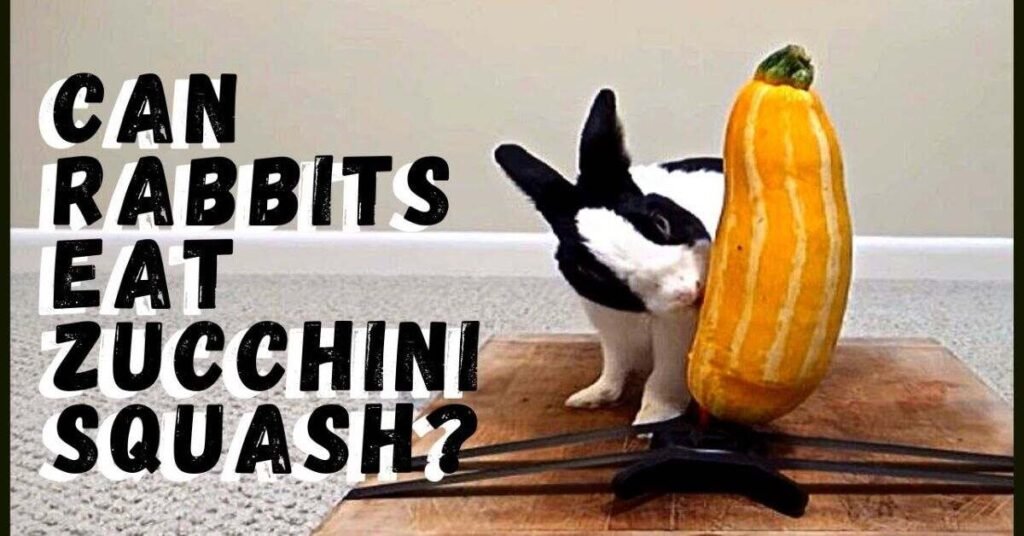
Yes, rabbits can eat zucchini in small amounts. It is one of the safest types of squash for them. Zucchini is soft, low in sugar, and easy to chew. It also has water and nutrients that can support your rabbit’s health.
Always serve zucchini raw and fresh. Cut it into small, thin pieces to make it easy to eat. Introduce it slowly and watch for any stomach problems. Zucchini should only be a treat, while hay and leafy greens remain the main part of your rabbit’s diet.
Can Rabbits Eat Butternut Squash?
Rabbits can have butternut squash in small, careful portions. It is not toxic, but it is a sweeter type of vegetable. Because of the natural sugar, it should only be offered once in a while. A tiny piece can be a nice treat for your rabbit.
Always give butternut squash raw and unseasoned. Peel off the tough skin and remove the seeds first. Cut the flesh into thin, bite-size pieces. Start with a small amount and watch your rabbit for any stomach upset. Hay should still be the main food every day.
Can Rabbits Eat Acorn or Yellow Squash?
Rabbits can eat yellow squash in small amounts. It is soft and easy to chew. It has low sugar compared to other squash types. Yellow squash should be given raw only. Too much can cause soft stools, so portion size matters.
Acorn squash is different. It is higher in starch and carbs. Rabbits should only eat it rarely. The skin and seeds must be removed. Small cubes are safest. Hay and leafy greens should always be the main food.
| Squash Type | Safe for Rabbits | How Often to Feed | Portion Size | Main Concern | Feeding Tips |
| Yellow squash | Yes | 2–3 times/week | Few thin slices | Watery stools | Serve raw |
| Acorn squash | Limited | Rarely | Small cube | High starch | Peel skin |
| Squash skin | No | Never | None | Hard to digest | Remove fully |
| Squash seeds | No | Never | None | Choking risk | Always remove |
| Cooked squash | No | Never | None | Digestive stress | Avoid |
| Baby rabbits | No | Never | None | Sensitive gut | Wait until adult |
| Mixed squash | Limited | Occasionally | Small pieces | Sugar intake | One type at a time |
| Fresh squash | Yes | Limited | Small portions | Overfeeding | Introduce slowly |
| Squash treats | No | Never | None | Added sugar | Avoid |
| Wild squash | No | Never | None | Unknown toxins | Unsafe |
Can Rabbits Eat Squash Skin, Seeds, and Leaves?
Rabbits should be very careful with squash parts. Squash skin is tough and hard to digest. It can cause stomach problems. Squash seeds are also unsafe. They are hard and may cause choking. Seeds can block digestion if swallowed.
Squash leaves are different. Some squash leaves may be safe in small amounts. They must be fresh and pesticide-free. Not all leaves are safe for rabbits. Introduce leaves slowly and watch closely. When unsure, it is best to avoid them.
| Squash Part | Safe for Rabbits | Risk Level | Main Concern | Feeding Advice | Safety Verdict |
| Squash skin | No | High | Hard to digest | Remove completely | Unsafe |
| Squash seeds | No | Very high | Choking | Never feed | Unsafe |
| Cooked skin | No | High | Gut stress | Avoid | Unsafe |
| Raw skin | No | High | Digestive blockage | Avoid | Unsafe |
| Squash leaves | Limited | Medium | Possible irritation | Introduce slowly | Use caution |
| Young leaves | Limited | Medium | Sensitive digestion | Small amount | Caution |
| Mature leaves | No | High | Tough texture | Avoid | Unsafe |
| Treated leaves | No | Extreme | Chemical exposure | Never feed | Deadly |
| Unknown leaves | No | Extreme | Possible toxins | Avoid | Unsafe |
| Safe alternatives | Yes | None | — | Use leafy greens | Safe |
Are Squash Seeds Safe for Rabbits?
Squash seeds are not safe for rabbits. They are hard and difficult to digest. Eating seeds can cause stomach problems or blockages. For this reason, always remove seeds before giving squash to your rabbit.
Some important points to remember about squash seeds:
- Do not feed seeds to rabbits.
- Only offer the soft flesh of squash.
- Cut squash into small, easy-to-eat pieces.
- Serve it raw and plain, without seasoning.
- Treat squash as an occasional snack, not a main food.
Is Squash Skin Easy to Digest?
Squash skin is not always easy for rabbits to digest. Some types have tough, thick skins that can upset their stomachs. Soft-skinned squash, like zucchini, is easier to chew and digest. Still, it’s best to peel the skin for safety, especially for young or small rabbits.
Tips for feeding squash safely:
- Remove hard or thick skins before serving.
- Cut squash into small, bite-size pieces.
- Offer only soft, fresh squash.
- Serve as an occasional treat, not daily.
- Always watch your rabbit after trying new foods.
How Much Squash Can Rabbits Eat?
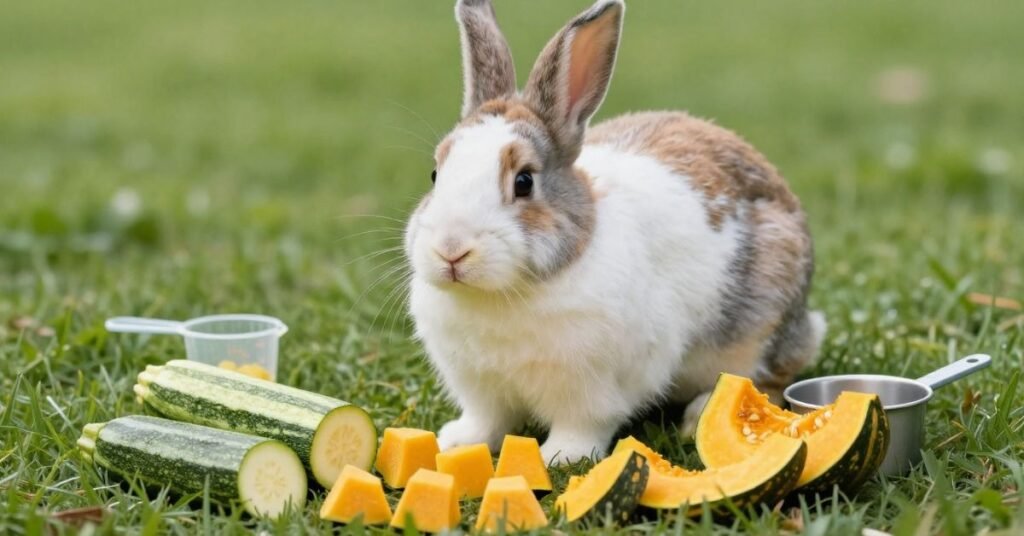
Rabbits should only have squash in very small amounts. Eating too much can upset their stomach or cause loose stools. A few small cubes or a thin slice is enough as a treat. Squash should never take the place of hay or fresh greens in their diet.
It’s best to start with a tiny piece and see how your rabbit reacts. If there are no digestive issues, you can offer it occasionally, about once or twice a week. Always remember, moderation is key. Hay should stay the main part of every rabbit’s meals.
Risks of Feeding Squash to Rabbits
Feeding squash to rabbits comes with some risks. Squash contains natural sugars, which can cause stomach upset or diarrhea if eaten in large amounts. Hard skins and seeds can be difficult to digest. Overfeeding squash can also lead to weight gain and other health problems.
To keep your rabbit safe, follow these tips:
- Avoid giving large portions at once.
- Remove hard skins and seeds before serving.
- Offer squash only as an occasional treat.
- Watch for signs of digestive problems, like soft stools or bloating.
- Always keep hay and leafy greens as the main part of the diet.
Healthier Vegetable Alternatives to Squash
There are many vegetables that are safer and healthier for rabbits than squash. Leafy greens and herbs are low in sugar and easy to digest. They can be fed in larger amounts without harming your rabbit’s stomach. These vegetables also provide important vitamins and minerals.
Some good alternatives to squash include:
- Romaine lettuce or green leaf lettuce
- Kale (in small amounts)
- Spinach (occasionally)
- Parsley and cilantro
- Carrot tops and beet greens
Conclusion
Many rabbit owners wonder, can rabbits eat squash. The answer is yes, but only in small amounts. Squash can be a tasty treat, but too much may upset your rabbit’s stomach. Always remove seeds and hard skin before serving. Soft varieties like zucchini or peeled butternut squash are the safest options.
Squash should never take the place of hay or leafy greens. Hay is essential for a rabbit’s digestion and overall health. Leafy greens and other safe vegetables are better for daily meals. Can rabbits eat squash? Yes, but it should only be occasional, not a regular part of their diet.
Introduce squash slowly to your rabbit. Start with a small piece and observe for any signs of digestive trouble. If your rabbit handles it well, you can offer it occasionally as a treat. Avoid squash that is cooked, seasoned, or high in sugar.
A balanced diet is key to a happy, healthy rabbit. Treats like squash are extras, not staples. Focus on hay, fresh greens, and safe vegetables. Understanding can rabbits eat squash ensures your pet stays safe, healthy, and enjoys a variety of tasty treats.
FAQs
1. Can rabbits eat squash every day?
No, rabbits should not eat squash every day. Squash is high in natural sugar, which can upset their stomach. It should only be offered occasionally as a small treat alongside hay and leafy greens.
2. Can rabbits eat squash seeds?
No, squash seeds are hard and difficult for rabbits to digest. They can cause blockages or stomach problems. Always remove seeds before feeding squash to your rabbit.
3. Can rabbits eat squash with skin?
Some squash skins are tough and hard to digest. Soft-skinned varieties like zucchini are safer, but it’s still best to peel thick or hard skins. This helps prevent digestive issues.
4. Can rabbits eat cooked squash?
No, rabbits should only eat raw and fresh squash. Cooked or seasoned squash can contain oils, salt, or spices that are harmful. Raw squash in small pieces is the safest option.
5. Can rabbits eat squash as a main food?
No, squash should never replace hay or leafy greens. It is a treat, not a main food. Hay should always be the primary part of a rabbit’s diet for healthy digestion.
