

Introduction
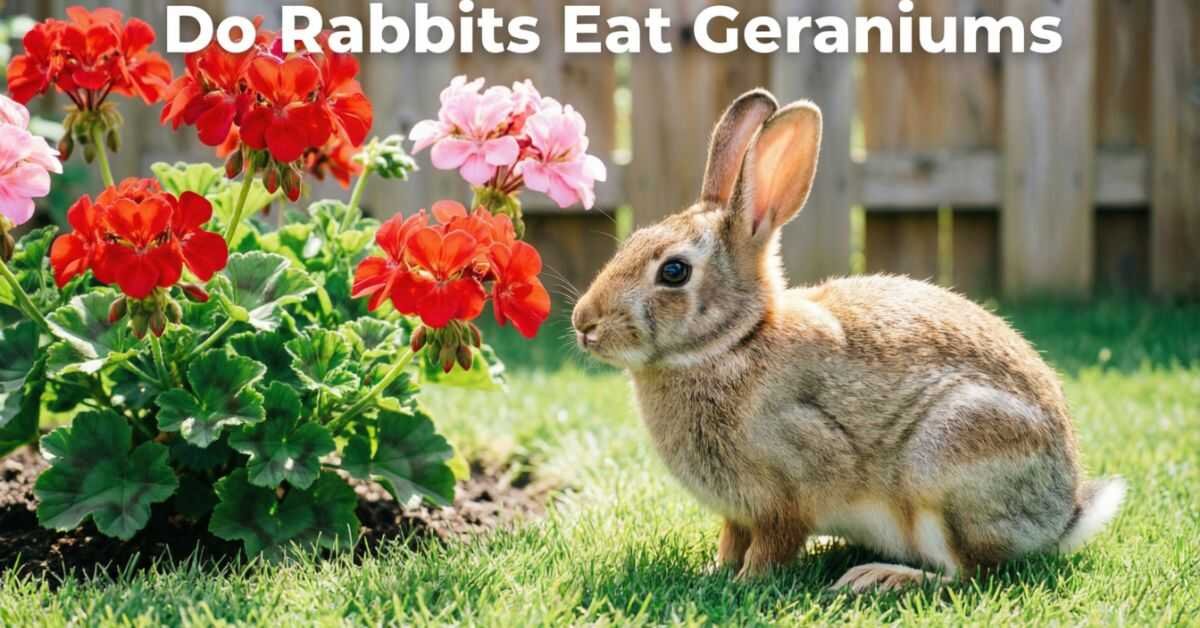
Rabbits are small animals that love to eat plants. They often chew on soft leaves, flowers, and fresh shoots. Geraniums are bright and colorful plants that many people grow in their gardens. Because of this, many garden owners ask, do rabbits eat geraniums when they see plant damage.
It can be upsetting to find your flowers chewed in the morning. You may start to wonder, do rabbits eat geraniums or is another animal causing the problem? Rabbits usually look for easy and soft food. If your garden is open, they may stop by for a quick snack.
The simple answer is that do rabbits eat geraniums depends on the situation. Some rabbits may taste them, especially if other food is limited. In this article, you will learn why this happens and how to protect your lovely geraniums.
Do Rabbits Eat Geraniums?
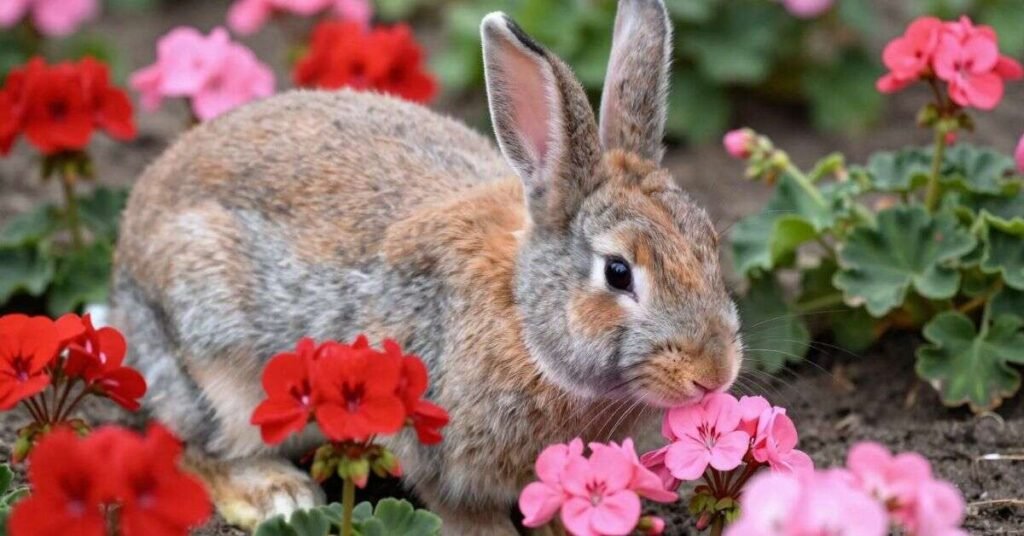
Rabbits sometimes eat geraniums, but they are not their favorite food. They usually prefer soft grass, leafy greens, and tender garden plants. If these foods are easy to find, rabbits may ignore geraniums. However, a hungry rabbit may still nibble on them, especially when other plants are not available.
Geraniums have a strong smell and taste, which many rabbits do not like. This natural scent can help keep them away. Still, young rabbits or very hungry ones may try them. Garden owners should watch for bite marks and protect their plants if rabbits visit the area.
Are Geraniums Safe or Toxic to Rabbits?
Geraniums are not considered safe food for rabbits. Many types of geraniums can upset a rabbit’s stomach. Some may even be mildly toxic. Rabbits have very sensitive digestive systems, so even a small bite can cause problems.
If a rabbit eats geranium leaves or flowers, it may feel sick. Signs can include loss of appetite, soft droppings, or stomach discomfort. It is best to keep geraniums out of reach and offer safe plants instead.
| Plant Name | Safe for Rabbits? | Possible Effects if Eaten | Notes |
| Geraniums | No | Stomach upset, mild toxicity | Avoid feeding to rabbits |
| Rose petals | Yes | Usually safe in small amounts | Remove pesticides first |
| Basil | Yes | Safe and healthy herb | Feed in moderation |
| Parsley | Yes | Good source of vitamins | Do not overfeed |
| Cilantro | Yes | Safe leafy herb | Great as a treat |
| Carrot tops | Yes | Safe and tasty | Better than carrot root |
| Lettuce (Romaine) | Yes | Safe in small amounts | Avoid iceberg lettuce |
| Dandelion leaves | Yes | Very healthy for rabbits | Wash before feeding |
| Mint | Yes | Safe herb | Strong smell rabbits enjoy |
| Spinach | Limited | High in oxalates | Offer only occasionally |
Why Rabbits May Be Attracted to Geranium Plants
Rabbits look for easy and fresh food. Young geranium leaves can be soft and tender. This makes them easy to chew. If grass or other plants are not around, a rabbit may try geraniums. Hunger often makes them less picky.
Rabbits also explore plants with their noses and teeth. They may take small bites just to test the taste. Gardens with many flowers can attract curious rabbits. If geraniums are in open spaces, rabbits may stop and nibble on them.
Are Geraniums Poisonous to Rabbits?
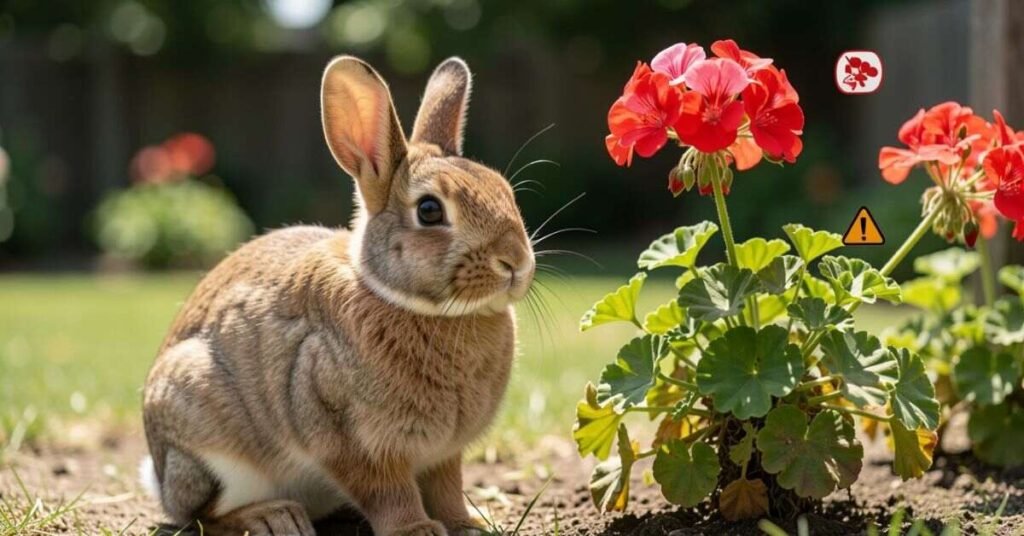
Geraniums are not a safe plant for rabbits to eat. Parts of the plant can irritate a rabbit’s stomach. Rabbits need gentle, fiber-rich foods, and geraniums do not fit that diet. Even a small bite may lead to digestive trouble.
You should watch your rabbit if it gets near geranium plants. Signs of a problem may appear within a short time. Quick action can help keep your rabbit safe and comfortable.
- Reduced appetite
- Loose or soft droppings
- Swollen or painful belly
- Tired or weak behavior
- Sitting still more than usual
What Happens If a Rabbit Eats Geraniums?
If a rabbit eats geraniums, it may get an upset stomach. Geraniums are not safe for their delicate digestive system. The leaves and flowers can irritate the gut. This may lead to soft droppings, less appetite, or signs of discomfort.
In some cases, the rabbit may seem quiet or tired. It may sit still or refuse food. These signs should not be ignored. If you notice any changes after your rabbit eats geraniums, it is best to contact a vet and keep the rabbit on a simple, safe diet.
Common Symptoms of Geranium Poisoning in Rabbits
If a rabbit eats geraniums, it may start to feel sick. The stomach is usually affected first. Rabbits have very sensitive digestive systems. Even a small amount can cause discomfort. Symptoms can appear within a few hours.
It is important to watch your rabbit closely. Early signs can help you act fast. Contact a vet if symptoms seem serious or do not improve.
Common symptoms include:
- Loss of appetite
- Soft or watery droppings
- Bloated or hard belly
- Low energy or weakness
- Grinding teeth in pain
- Sitting in a hunched position
How to Protect Geraniums from Rabbits in Your Garden
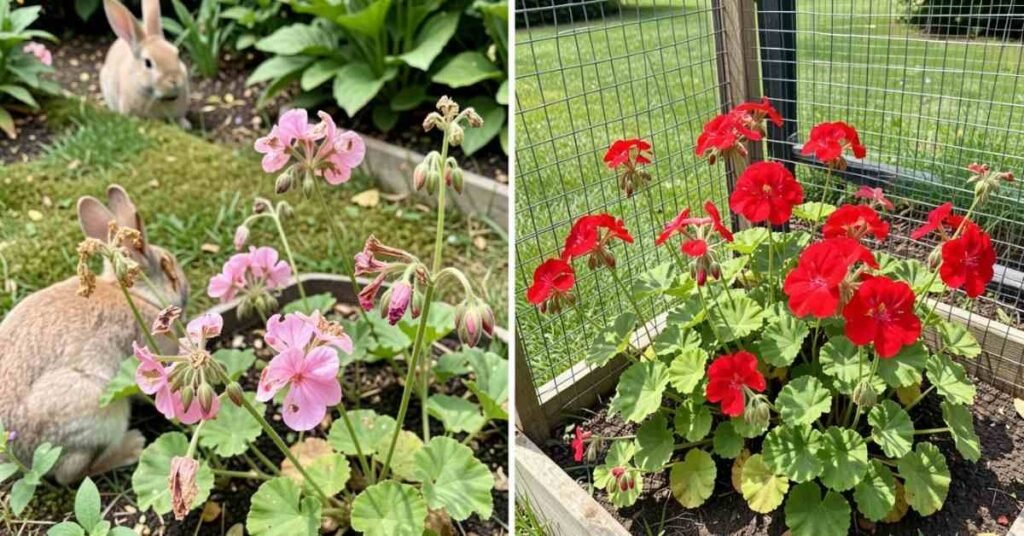
Keeping rabbits away from geraniums is important for a healthy garden. One way is to use physical barriers. Fences or netting around plants can stop rabbits from reaching them. Raised pots or hanging baskets also make it harder for rabbits to nibble.
You can also use natural repellents. Strong smells like garlic, chili, or citrus can keep rabbits away. Regularly checking your garden helps too. Remove fallen leaves or flowers that may attract them. Combining barriers and repellents works best to protect your geraniums.
Rabbit-Proof Fencing and Garden Barriers
One of the best ways to protect geraniums is with rabbit-proof fencing. Rabbits can jump or squeeze through small gaps. A fence at least 2 feet high and buried a few inches in the ground can keep them out. Garden barriers like mesh cages or plant covers also work well.
Different types of fencing and barriers have pros and cons. Using the right one can save your plants and keep rabbits safe. Here is a guide to help you choose:
| Barrier Type | Description | Height/Depth Needed | Pros | Cons |
| Wire Mesh Fence | Metal mesh that surrounds the garden | 2–3 feet high, 6 inches buried | Durable, long-lasting | Can be expensive |
| Chicken Wire | Flexible wire mesh | 2 feet high, 4–6 inches buried | Easy to install, cheap | Less durable than metal mesh |
| Garden Netting | Lightweight netting over plants | Cover entire plant | Keeps rabbits and birds out | Can tear easily |
| Raised Garden Beds | Plants grown above ground level | N/A | Harder for rabbits to reach | May require more maintenance |
| Plant Cages | Individual cages around plants | 1–2 feet high | Protects specific plants | Can look unattractive |
| Electric Rabbit Fence | Low-voltage electric wire | 6–12 inches high | Highly effective | Needs power, regular maintenance |
| Plastic Mesh Barriers | Flexible plastic fencing | 2 feet high | Cheap, easy to move | Less durable in wind or sun |
Natural Rabbit Repellents That Actually Work
You can protect geraniums using natural repellents. Rabbits dislike strong smells. Sprinkling garlic, chili powder, or crushed citrus peels around plants can keep them away. These scents confuse rabbits and make your garden less attractive.
Other options include planting herbs that rabbits avoid. Lavender, rosemary, and mint work well. You can also spray a mix of water and safe essential oils on your plants. Reapply regularly, especially after rain. Natural repellents are safe for rabbits and keep your geraniums protected.
Safe Plants and Flowers for Rabbits to Eat
Not all garden plants are dangerous for rabbits. There are many safe options they can enjoy. These plants provide nutrients and keep your rabbit happy. Offering safe plants also reduces the chance they will nibble on geraniums or other harmful flowers.
Some safe plants and flowers for rabbits include:
- Dandelion leaves : healthy and tasty
- Basil : aromatic and safe
- Parsley : full of vitamins
- Cilantro : gentle on the stomach
- Carrot tops : better than carrot roots
- Lettuce (Romaine) : soft and hydrating
- Rose petals : edible if pesticide-free
- Mint : flavorful and safe
Safe Herbs and Greens for Pet Rabbits
Pet rabbits need fresh, safe greens every day. These provide nutrients, fiber, and variety in their diet. Offering safe herbs and vegetables keeps rabbits healthy and happy. It also reduces the chance they will nibble on unsafe plants like geraniums.
Here is a list of safe herbs and greens for rabbits:
| Herb/Green | Part to Feed | Benefits | Notes |
| Basil | Leaves | Rich in vitamins | Feed in moderation |
| Parsley | Leaves | High in vitamin C | Wash before feeding |
| Cilantro | Leaves & stems | Digestive aid | Great for treats |
| Dandelion | Leaves & flowers | High fiber & minerals | Remove pesticides |
| Spinach | Leaves | Vitamins & calcium | Feed occasionally due to oxalates |
| Kale | Leaves | Rich in nutrients | Feed in small amounts |
| Lettuce (Romaine) | Leaves | Hydrating & soft | Avoid iceberg lettuce |
| Mint | Leaves | Aromatic & safe | Small amounts preferred |
| Oregano | Leaves | Antioxidants | Can be added fresh or dried |
| Thyme | Leaves | Strong aroma, safe | Use sparingly |
| Endive | Leaves | Low-calorie leafy green | Safe for daily feeding |
| Chamomile | Flowers & leaves | Calming effect | Safe in small amounts |
How to Stop Rabbits from Eating Garden Plants
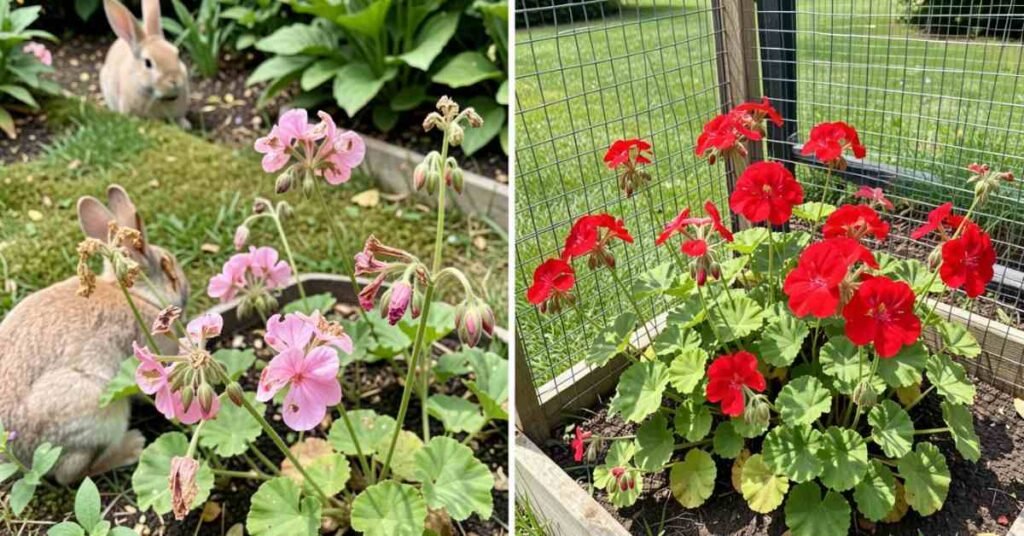
Rabbits love fresh garden plants and can quickly damage your flowers and vegetables. Protecting your garden is important for both your plants and your pets. Using a mix of barriers, safe plants, and natural deterrents can keep rabbits away without harming them.
Here are some effective ways to prevent damage:
- Build fences or mesh barriers around your plants
- Use protective cages for young or vulnerable flowers
- Spread natural repellents like garlic, chili, or citrus peels
- Grow safe, rabbit-friendly herbs and greens in a separate area
- Keep your garden tidy and remove fallen leaves or flowers
- Check your plants daily for signs of nibbling or damage
Can Wild Rabbits Eat Geraniums?
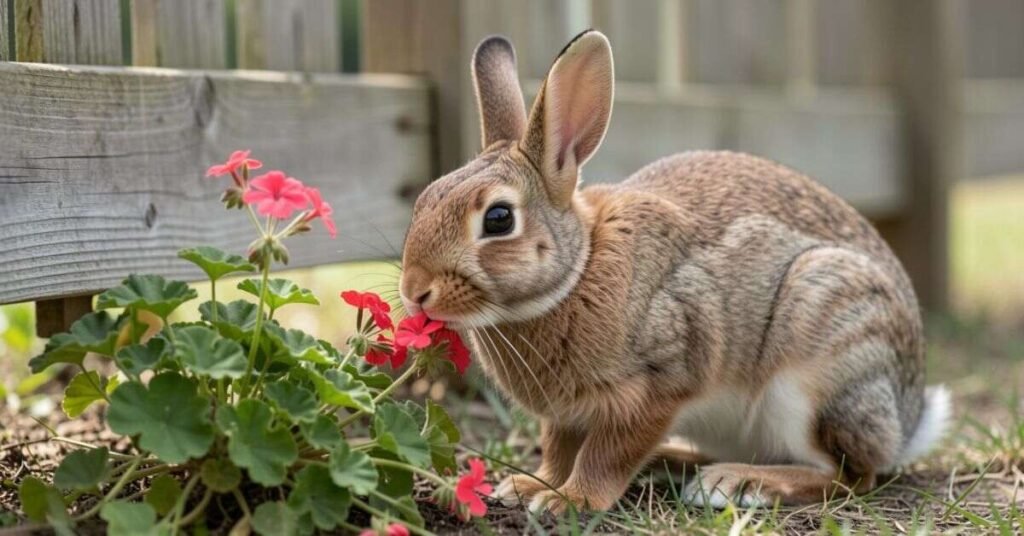
Wild rabbits may nibble on geraniums if food is scarce. They usually prefer grass, clover, and leafy plants. Geraniums have a strong taste, so many wild rabbits avoid them. However, a hungry rabbit might take a small bite.
Wild rabbits can damage garden plants quickly. They explore with their nose and teeth. If your garden is open, wild rabbits may try to eat geraniums. Using barriers and repellents can help protect your flowers from them.
Conclusion
Rabbits and geraniums do not always mix well. Geraniums can upset a rabbit’s stomach and may be mildly toxic. It is better to keep rabbits away from these plants. This keeps both your rabbit and your garden safe.
Observing your rabbit is important. If it ever eats geraniums, watch for signs of sickness. Soft droppings, low energy, or loss of appetite are warning signs. Quick action can prevent serious problems.
You can protect your garden in many ways. Fences, mesh barriers, and plant cages work well. Natural repellents like garlic, chili, or citrus can also help. Combining methods gives the best results.
Offering safe plants and herbs keeps rabbits happy. Dandelion leaves, parsley, basil, and mint are great options. When rabbits have safe alternatives, they are less likely to touch geraniums. A little care keeps both your garden and pets healthy.
FAQs
1. Do rabbits eat geraniums often?
Rabbits do not usually prefer geraniums. They like soft leaves and grasses more. However, a hungry rabbit may nibble on geraniums if other food is scarce.
2. Are geraniums safe if rabbits eat them?
Geraniums are not considered safe for rabbits. Eating them can cause stomach upset or mild toxicity. It is best to keep rabbits away from these plants.
3. How can I stop rabbits from eating geraniums?
You can use fences, mesh barriers, or plant cages to protect geraniums. Natural repellents like garlic or citrus peels also work. Offering safe plants nearby can reduce their interest in geraniums.
4. Will wild rabbits eat geraniums in my garden?
Wild rabbits may try geraniums, especially if food is limited. Their strong taste often discourages most wild rabbits. Barriers and repellents can help protect your garden.
5. Can rabbits nibble on geranium flowers safely?
Even small bites of geranium flowers can be risky. Rabbits have sensitive stomachs, and these plants may cause discomfort. Providing safe herbs and greens is a better choice.
