

Feeding your rabbit the right food is one of the most important parts of keeping them healthy, active, and happy. Yet, with so many brands and options available, it can be hard to know what “rabbit rabbit food” really means and how to choose the best diet for your furry friend.
Rabbits have very specific dietary needs. Their digestion, teeth, and overall well-being depend on eating the right balance of fiber, nutrients, and fresh ingredients. A poor diet can lead to serious health issues like dental disease or digestive problems.
In this complete guide, we’ll break down what makes the best rabbit food, explore the different types available, and give you clear, practical tips for creating a balanced diet your rabbit will love.
What Is Rabbit Rabbit Food?
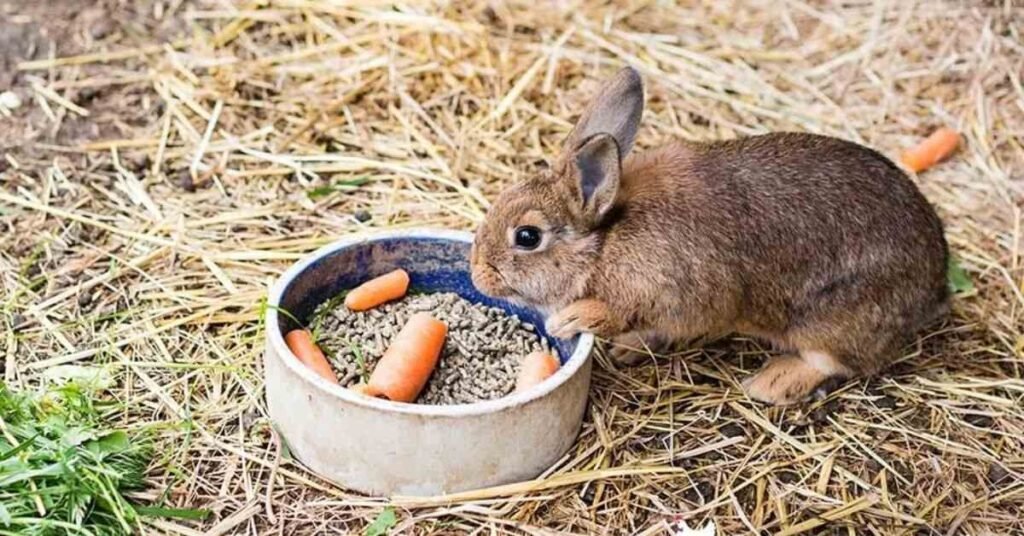
Rabbit rabbit food refers to the complete diet that keeps your rabbit healthy typically made up of hay, pellets, fresh vegetables, and occasional treats. While commercial rabbit pellets are often the first thing that comes to mind, hay should actually make up the majority of your rabbit’s diet.
Rabbits are herbivores, meaning they thrive on plant-based foods. Their digestive systems are built for constant grazing, which is why fiber is the key to their health.
A balanced rabbit diet usually includes:
- Hay (70–80%): The foundation of a rabbit’s diet.
- Fresh vegetables (10–15%): Leafy greens and safe veggies.
- High-quality pellets (5–10%): For essential vitamins and minerals.
- Fresh water (daily): Always available.
- Occasional treats (less than 5%): Healthy and natural.
The Importance of Hay in a Rabbit’s Diet
Hay is the single most important food for your rabbit. It provides the high fiber content needed for healthy digestion and helps keep teeth properly worn down.
Rabbits have teeth that never stop growing, and chewing hay constantly helps prevent dental overgrowth. A common issue in pet rabbits.
There are several types of hay suitable for rabbits:
- Timothy Hay: The gold standard for adult rabbits; high in fiber and low in calcium.
- Orchard Grass Hay: Softer and sweeter, perfect for picky eaters.
- Meadow Hay: A mix of grasses and wild plants for variety.
- Alfalfa Hay: Best for baby rabbits under six months or nursing mothers because it’s rich in protein and calcium.
Pellets: Choosing the Right Rabbit Rabbit Food Mix
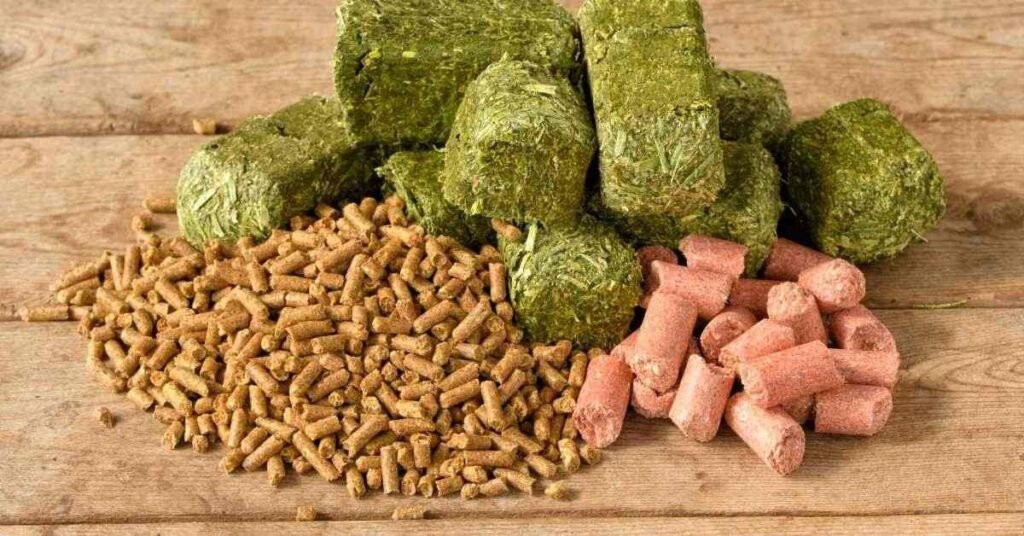
Pellets can be a great addition to your rabbit’s diet when chosen carefully. They provide essential nutrients that might not always be present in hay or greens.
Look for pellets that are:
- Timothy-based rather than alfalfa-based (for adult rabbits)
- High in fiber (at least 18%)
- Low in protein and calcium (to prevent urinary issues)
- Free from added sugars, seeds, or colorful bits
Feeding Guidelines for Pellets:
- Adult rabbits:
Around 25 grams per kg of body weight per day.
- Young rabbits:
More pellets until six months old, then gradually reduce.
Pellets should never replace hay. Think of them as a supplement rather than the main meal.
Fresh Vegetables and Greens for Rabbits
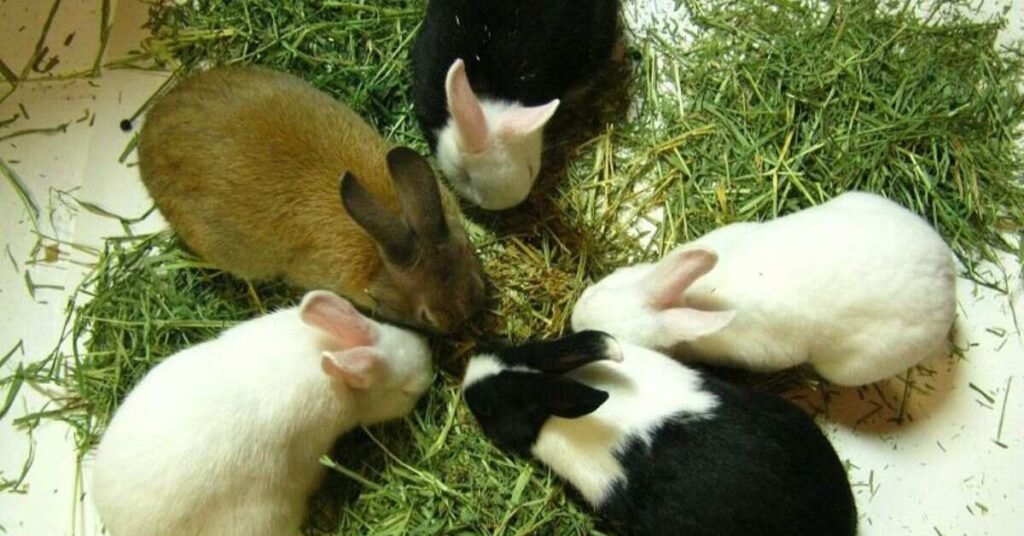
Fresh vegetables provide essential vitamins, hydration, and enrichment. Rabbits love to explore new flavors and textures, so rotating their greens keeps things exciting.
Safe and healthy vegetables for rabbits include:
- Romaine lettuce (avoid iceberg)
- Kale (in moderation)
- Cilantro
- Parsley
- Spinach (occasional)
- Carrot tops
- Dandelion greens
- Basil
Foods to Avoid:
Avoid feeding your rabbit these foods, as they can cause digestive problems or be toxic:
- Potatoes
- Onions
- Garlic
- Corn
- Iceberg lettuce
- Rhubarb
- Chocolate or sugary snacks
How Much and How Often Should You Feed Your Rabbit?
Rabbits need constant access to hay, so their hay rack should never be empty. Fresh water should also be available at all times.
Here’s a simple feeding routine to follow:
- Morning:
Fresh hay and a measured amount of pellets.
- Evening:
Fresh vegetables and more hay.
- Throughout the day:
Occasional treats and top-ups of water and hay.
Consistency helps your rabbit maintain a healthy digestive rhythm. Sudden diet changes can upset their stomach, so always introduce new foods gradually.
Treats and Snacks: What’s Safe for Rabbits?
Treats are a fun way to bond with your rabbit and reward good behavior, but they should be given sparingly.
Healthy treat options include:
- Small pieces of apple or banana
- Fresh herbs like mint or dill
- Dried flowers such as chamomile or marigold
Special Diets and Considerations
Just like people, rabbits have different needs based on their age, activity level, and health status.
- Baby rabbits (under 6 months):
Need more calories and calcium from alfalfa hay and pellets.
- Adult rabbits:
Should primarily eat timothy hay and a moderate amount of pellets.
- Senior rabbits (over 6 years):
May benefit from softer hays like orchard grass and a small increase in pellets if they lose weight.
How to Transition to a New Rabbit Rabbit Food
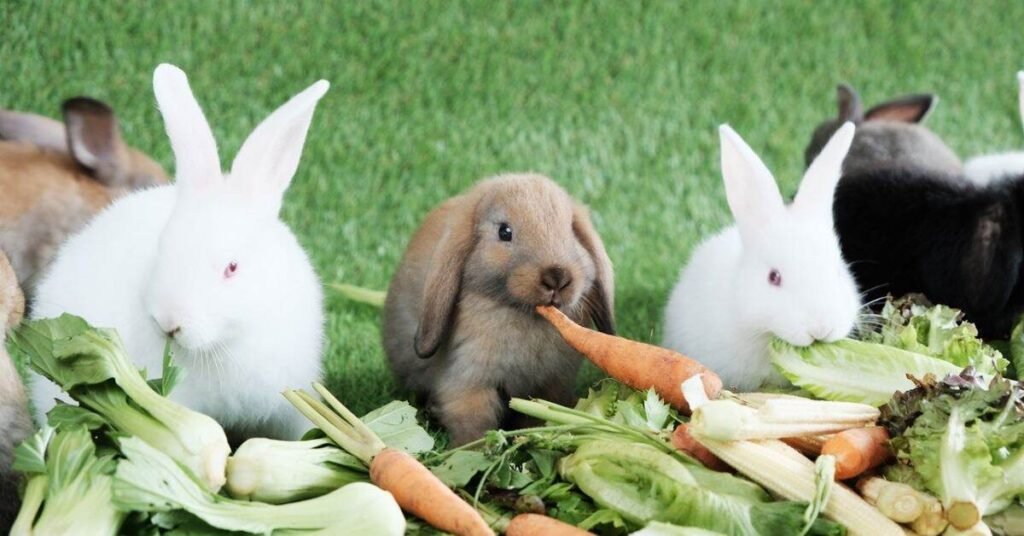
If you need to switch your rabbit’s food, do it gradually to avoid upsetting their sensitive digestive system.
Follow this safe transition plan:
- Week 1: Mix 75% old food with 25% new food.
- Week 2: 50% old food, 50% new food.
- Week 3: 25% old food, 75% new food.
- Week 4: 100% new food.
Common Feeding Mistakes to Avoid
Even well-meaning rabbit owners can make feeding mistakes. Avoid these common pitfalls:
- Feeding too many pellets and not enough hay.
- Giving high-sugar fruits daily.
- Allowing food with artificial colors or seeds.
- Ignoring water cleanliness.
- Making sudden diet changes.
Remember: A rabbit’s diet affects more than just digestion. It impacts dental health, energy, and even mood.
Storing Rabbit Food Safely
Keep hay, pellets, and vegetables fresh by storing them properly:
- Store hay in a cool, dry area with airflow to prevent mold.
- Keep pellets in airtight containers to protect from moisture and pests.
- Refrigerate fresh veggies and wash them before serving.
Proper storage prevents spoilage and ensures your rabbit always eats the best-quality food.
Signs Your Rabbit Is Eating Well
A well-fed rabbit will show clear signs of good health:
- Bright, alert eyes
- Smooth, shiny coat
- Regular, round droppings
- Good energy and curiosity
Practical Takeaways: Your Rabbit Feeding Checklist
- Provide unlimited fresh hay every day.
- Offer a small, measured amount of pellets.
- Add a variety of leafy greens and vegetables.
- Give healthy treats sparingly.
- Ensure constant access to clean water.
- Store all food safely and replace old hay often.
Conclusion
Feeding your rabbit doesn’t have to be complicated. Once you understand the basics of rabbit rabbit food. A hay-based diet, balanced with fresh greens and a few pellets.TYou’re setting your bunny up for a long, joyful life.
The right nutrition not only keeps your rabbit physically healthy but also supports their natural behaviors and emotional well-being. By providing a variety of quality foods and keeping their diet consistent, you’ll strengthen your bond and enjoy a happier, more active companion.
FAQs
1. What is rabbit rabbit food?
Rabbit rabbit food refers to the complete diet a rabbit needs, including hay, fresh greens, pellets, and occasional treats to stay healthy and active.
2. What type of hay is best for rabbits?
Timothy hay is the best choice for adult rabbits because it’s high in fiber and low in calcium, promoting good digestion and dental health.
3. How much rabbit rabbit food should I give daily?
Provide unlimited hay, a small portion of pellets (about 25 grams per kg of body weight), and 1–2 cups of fresh vegetables daily.
4. Can rabbits eat fruits as part of their diet?
Yes, but only in small amounts. Offer small pieces of fruits like apple or banana once or twice a week as treats.
5. What foods should I avoid feeding my rabbit?
Avoid iceberg lettuce, onions, garlic, potatoes, rhubarb, and any sugary or processed foods, as they can harm your rabbit’s health.
