


Introduction
Rabbit snail are freshwater snails known for their distinctive appearance. They get their name from their long, rabbit-like face and slim, extended antennae. Many aquarium enthusiasts love them because they are peaceful, attractive, and add a unique charm to any tank.
These snails easily catch attention in aquariums. Their slow, graceful movements and striking, often colorful shells make them stand out. They are especially popular in planted tanks, where their presence adds life and creates a natural, dynamic look. Rabbit snails are gentle and rarely bother other tank inhabitants, making them a perfect choice for community aquariums.
Rabbit snails are also relatively easy to care for. They enjoy grazing on algae, leftover fish food, and sinking pellets. They also nibble on soft plants, helping to keep the tank clean. Proper water conditions—stable pH, moderate temperature, and clean water—are important for their health. With good care, rabbit snails can grow slowly over time and live for several years.
What Is a Rabbit Snail?
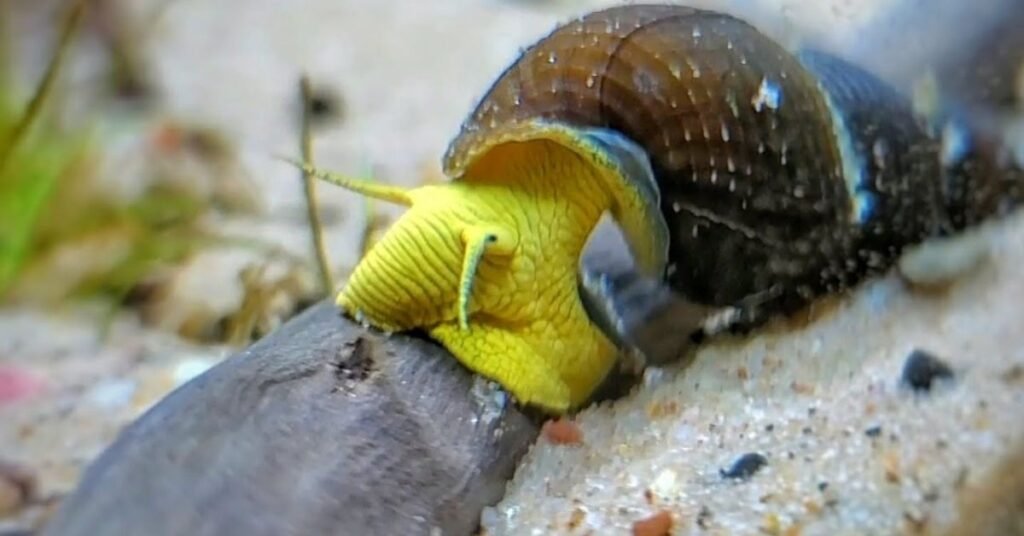
A rabbit snail is a type of freshwater snail often kept in aquariums. Its long face resembles a rabbit, and the antennae look like tiny ears. The shell is tall and pointed, with colors that can range widely, adding a striking feature to any tank. Many hobbyists appreciate them for their unique appearance and calm demeanor.
Gentle and easy to care for, these snails move slowly and enjoy soft foods such as algae and sinking pellets. By consuming leftover food and plant debris, they naturally help keep the aquarium clean. Their peaceful nature makes them an ideal addition to community tanks.
Natural Habitat, Origin, and Behavior of Rabbit Snails
Rabbit snails are native to the freshwater rivers and lakes of Indonesia, especially on the island of Sulawesi. They prefer calm waters with soft sandy or muddy bottoms. Their natural environment is warm, clean, and full of plants, rocks, and pieces of driftwood. These snails enjoy hiding and exploring slowly, feeling safe in steady surroundings.
In personality, rabbit snails are gentle and reserved. They spend most of their time near the substrate, quietly moving around in search of food. Their diet includes algae, biofilm, and tender plant material. Although they are active in their routines, they are never aggressive. They can thrive alone or in small groups, and their presence also helps maintain a clean and healthy aquarium.
| Feature | Details |
| Natural Habitat | Freshwater rivers and lakes |
| Native Region | Sulawesi, Indonesia |
| Water Type | Fresh, clean, slow-moving water |
| Temperature Range | Warm tropical water |
| Substrate | Sand or soft mud |
| Common Surroundings | Plants, rocks, driftwood |
| Activity Level | Slow and steady |
| Behavior Type | Peaceful and shy |
| Aggression | None |
| Social Nature | Can live alone or in groups |
| Feeding Style | Bottom feeder |
| Main Diet | Algae, biofilm, plant matter |
| Role in Aquarium | Cleaning and algae control |
| Preferred Environment | Calm and stable |
| Movement Style | Crawling on surfaces |
Typical Behavior and Activity Patterns
Rabbit snails are slow-moving and gentle creatures. Most of their time is spent at the bottom of the tank, searching for food by grazing on algae, soft plants, and leftover scraps. Digging in the sand and moving around plants is another activity they enjoy.
Activity levels vary throughout the day. They rest, explore, and then resume their slow movement. Fish and shrimp are left completely undisturbed by their presence. Their calm and peaceful nature makes them a perfect fit for community tanks.
| Behavior Aspect | Description |
| Activity Speed | Very slow and steady |
| Daily Movement | Grazing, digging, and exploring |
| Resting Pattern | Takes short breaks throughout the day |
| Feeding Style | Grazes on surfaces and sits at the bottom |
| Interaction With Fish | Peaceful and non-aggressive |
| Interaction With Shrimp | Compatible and calm |
| Interaction With Plants | Usually harmless; may nibble soft plants |
| Substrate Use | Enjoys digging in sand |
| Time of Activity | Active during the day and night, with pauses |
| Stress Response | Withdraws into shell when disturbed |
| Tank Role | Helps reduce algae and leftover food |
| Social Behavior | Can live alone or with others |
| Noise Level | Completely silent |
| Territorial Behavior | None |
| Aggression Level | None |
Rabbit Snail Appearance, Colors, and Unique Features
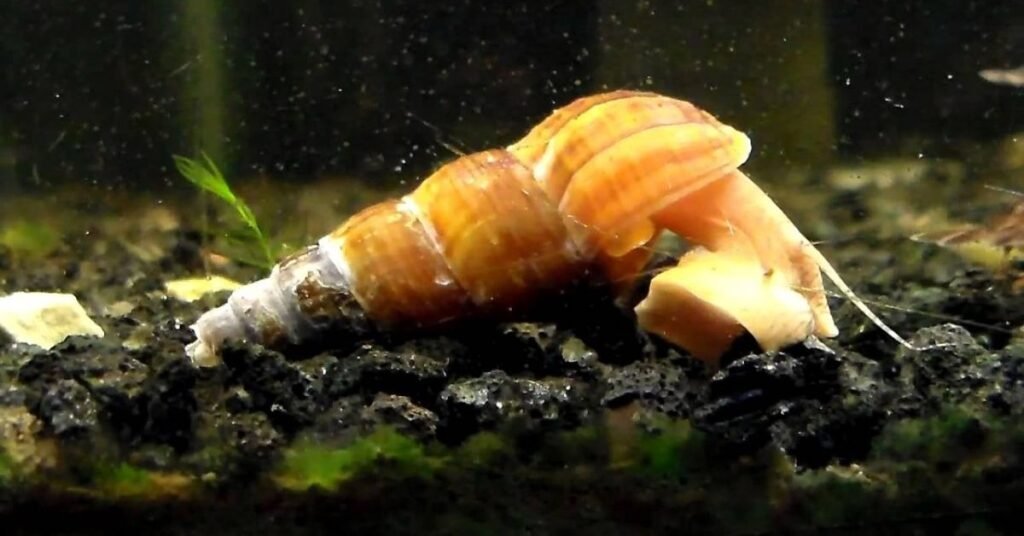
Rabbit snails have long, cone-shaped shells. Their shells come in different colors and patterns. They have a rabbit-like face with long antennae that look like ears. Their body is soft and stretches out of the shell as they move.
These snails are eye-catching and rare in many community tanks. Their slow movement makes them easy to watch. Each snail has its own shade and shape, which makes them interesting for aquarists who like unique pets.
| Feature | Description |
| Shell Shape | Long, pointed, and cone-like |
| Body Shape | Soft and elongated |
| Shell Colors | Yellow, brown, orange, black, white, mixed |
| Body Colors | Dark gray, tan, brown, golden, striped |
| Shell Texture | Smooth with visible rings |
| Shell Size | Can grow several centimeters long |
| Antennae | Long and thin, rabbit-like |
| Face Appearance | Slender with pointed nose |
| Patterns | Solid, striped, and speckled |
| Unique Trait | Rabbit-like face and long shell |
| Tank Presence | Eye-catching and unusual |
| Display Value | Popular among aquascapers |
| Movement Style | Slow and graceful |
| Visibility | Easy to spot on sand and plants |
Setting Up the Perfect Tank for Rabbit Snails
Rabbit snails need a clean and stable tank. The water should be warm and not too fast. They prefer sand or fine gravel because they like to dig. Plants, rocks, and driftwood make the tank feel natural and safe for them.
Good filtration is important. It keeps the water fresh and healthy. A lid also helps because snails may climb up the glass. With the right setup, rabbit snails stay active, grow well, and live longer.
Ideal Tank Size and Aquarium Requirements
Rabbit snails need enough space to move and dig. A small tank can stress them and make cleaning harder. A tank of at least 10 gallons is suitable for one or two snails. Bigger tanks work even better, especially if you plan to add plants or other tank mates.
They prefer warm, clean, and stable water. The water should not have sudden changes. A good filter helps keep the tank fresh. Soft sand or fine gravel is best for the bottom. It lets them dig without damaging their shells.
| Category | Recommended Details |
| Minimum Tank Size | 10 gallons for 1–2 snails |
| Best Tank Size | 20 gallons or more |
| Tank Shape | Longer tanks for better movement |
| Substrate Type | Sand or fine gravel |
| Water Temperature | Warm range (75–82°F / 24–28°C) |
| Water Flow | Slow and gentle |
| Filtration | Moderate filtration for clean water |
| Water Condition | Stable and low in pollutants |
| Lighting | Low to moderate |
| Planting | Live plants preferred |
| Decorations | Driftwood, rocks, and hiding spots |
| Escape Risk | Moderate, use a lid if needed |
| Maintenance | Regular water changes for stability |
| Community Compatibility | Peaceful tanks only |
Water Parameters, Temperature, and Filtration
Rabbit snails need clean and stable water. The temperature should be warm and not too low. Sudden changes in water conditions can stress them. Good water quality helps them stay active and healthy.
A filter keeps the water fresh and removes waste. The flow should be slow and gentle. Strong currents can make it hard for them to move. Regular water changes also help maintain balance in the tank.
| Category | Recommended Details |
| Water Temperature | 75–82°F (24–28°C) |
| pH Level | Slightly alkaline, around 7.0–8.0 |
| Hardness | Moderate to hard water |
| Water Flow | Slow and gentle |
| Filtration Type | Sponge or low-flow filter |
| Water Changes | Regular weekly changes |
| Ammonia Level | 0 ppm |
| Nitrite Level | 0 ppm |
| Nitrate Level | Low range |
| Oxygen Level | Moderate to high |
| Stability | Must avoid sudden changes |
| Purpose of Filtration | Removes waste and keeps water clean |
| Sensitivity | Sensitive to toxins and sharp swings |
| Benefit | Improves activity and lifespan |
Rabbit Snail Diet and Feeding Guide
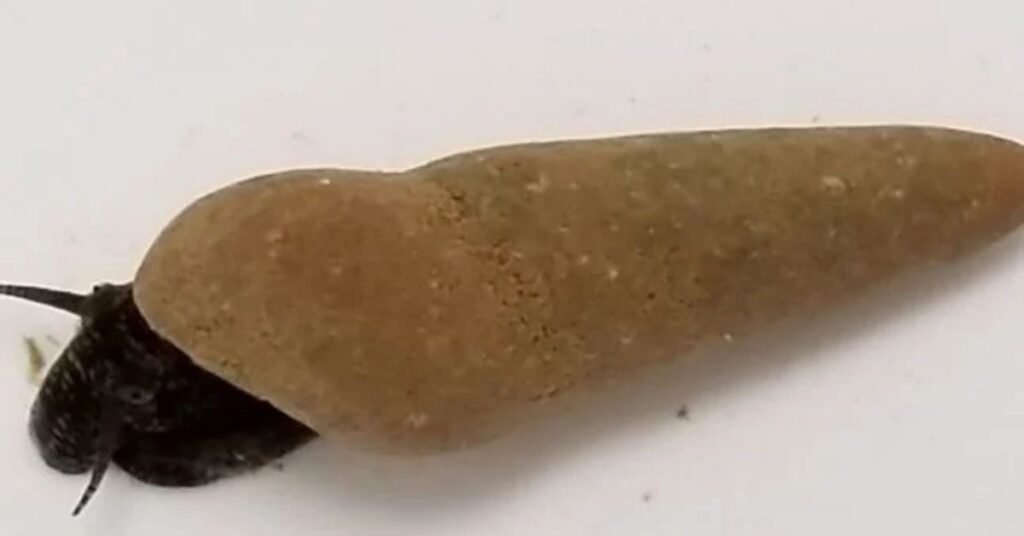
Rabbit snails are natural grazers in the aquarium. They feed on algae, biofilm, and any leftover food that sinks to the bottom. They also like soft vegetables and specially made sinking pellets. Giving them a balanced diet helps them grow strong and stay healthy.
Feeding them is easy. They eat slowly, so their food remains in the tank longer. Soft foods are best, as hard foods can be difficult for them. They are peaceful eaters and never bother fish, sharing their meals calmly with other tank inhabitants.
Foods They Like:
- Algae and biofilm
- Sinking snail pellets
- Blanched vegetables (spinach, zucchini, lettuce)
- Soft plant matter
- Algae wafers
- Leftover fish food
Best Foods for Healthy Growth and Strong Shells
Rabbit snails need foods rich in calcium for strong shells. They also need nutrients for healthy growth and energy. A proper diet keeps them active and helps prevent shell damage. Feeding them a mix of natural and prepared foods works best.
Here are the best foods for them:
- Algae and biofilm for grazing
- Blanched vegetables like spinach, zucchini, and lettuce
- Sinking snail or fish pellets
- Calcium supplements like cuttlebone or crushed eggshells
- Algae wafers for extra nutrition
- Soft plant matter for variety
Can Rabbit Snails Live Together?
Yes, rabbit snails can live together peacefully. They are slow and calm, so they rarely fight. Multiple snails in the same tank usually graze side by side without issues. They may even cluster together while resting.
However, avoid overcrowding. Each snail needs space to move and dig. A larger tank with enough food and hiding spots works best. They also do well with other peaceful tank mates like small fish or shrimp.
Common Rabbit Snail Problems and Care Tips
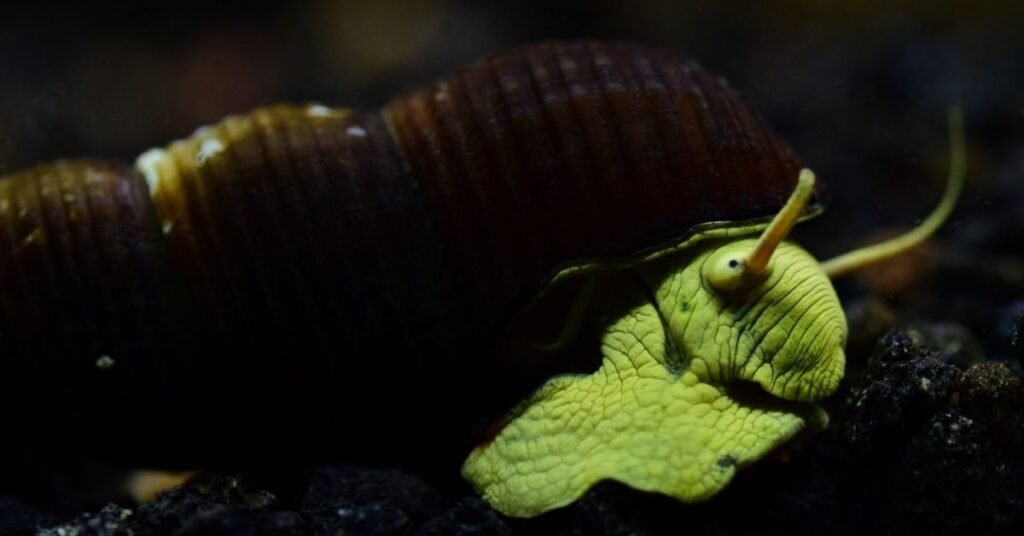
Rabbit snails are generally easy to care for, but they can face some problems. Shell damage, slow growth, or poor health may happen if water quality is bad. Overcrowding and lack of calcium can also cause issues. Watching them closely helps prevent problems early.
Here are some care tips to keep them healthy:
- Keep water clean with regular changes
- Maintain stable temperature and pH
- Provide enough calcium for strong shells
- Avoid overcrowding in the tank
- Feed a balanced diet with algae and vegetables
- Check for signs of stress or disease regularly
Health Issues and Prevention
Rabbit snails are usually healthy, but they can face some problems. Common issues include shell damage, poor growth, and infections. These usually happen when water quality is bad, or they lack proper nutrition. Preventing problems is easier than treating them.
Regular care and proper tank setup keep them healthy. Clean water, balanced diet, and enough calcium are key. Observing their behavior helps catch problems early. Providing hiding spots and avoiding overcrowding also reduce stress.
| Health Issue | Cause | Prevention | Signs to Watch |
| Shell Damage | Low calcium, rough substrate | Provide calcium supplements, smooth substrate | Cracks, holes, or thin shell |
| Slow Growth | Poor diet, low nutrients | Feed vegetables, pellets, algae | Smaller size than usual |
| Infections | Dirty water, poor filtration | Regular water changes, good filtration | Discoloration, soft body, unusual slime |
| Stress | Overcrowding, strong currents | Give space, gentle water flow | Hiding, slow movement, withdrawn |
| Poor Shell Color | Lack of calcium | Add cuttlebone or crushed eggshell | Dull or pale shell |
| Algae Shortage | Limited food | Supplement with algae wafers | Less grazing, lethargy |
| Sudden Death | Water spike, toxins | Stable water, monitor levels | No movement, retracted into shell |
| Predation by Tank Mates | Aggressive fish/shrimp | Choose peaceful tank mates | Broken shell, missing snails |
Conclusion
Rabbit snails are gentle and unusual pets for freshwater tanks. Their slow movements, calm nature, and long, pointed shells with rabbit-like faces make them fascinating to watch.
They also play a helpful role in the aquarium. By eating algae, leftover food, and soft plants, they help keep the tank clean and healthy. They are peaceful and do not disturb fish or shrimp.
Taking care of them is easy but requires attention. They need clean water, warm temperatures, and enough calcium for their shells. A balanced diet keeps them strong and healthy, while a well-prepared tank keeps them safe and active.
With proper care, rabbit snails can live for many years. They are a wonderful choice for both beginners and experienced hobbyists. Watching them graze slowly adds a calm, natural charm to any aquarium.
FAQs
1. How long do these snails live?
They can live for several years with proper care. Maintaining clean water, a balanced diet, and stable tank conditions helps them reach their full lifespan.
2. What do they eat in an aquarium?
They enjoy grazing on algae, biofilm, and leftover fish food. Blanched vegetables and sinking pellets are also great for nutrition and shell health.
3. Can they live with other fish or shrimp?
Yes, they are peaceful and calm. They get along with small, non-aggressive fish and invertebrates, making them perfect for community tanks.
4. How can I prevent shell damage?
Providing enough calcium in the diet is important. Smooth substrate and gentle water flow also protect their delicate shells from cracks or erosion.
5. What tank size is best for a few snails?
A minimum of 10 gallons works for one or two, but a larger tank is better. More space allows them to move, dig, and explore comfortably without stress.
