


Introduction
A New Zealand White rabbit is a large domestic rabbit breed known for its pure white fur, pink eyes, and friendly nature. Originally developed for commercial purposes, it has also become a popular pet worldwide. Many owners appreciate this breed because it is calm, adaptable, and relatively easy to care for.
Thinking about bringing a New Zealand White rabbit into your home? These gentle rabbits can make wonderful companions, but they also have specific needs. Without proper housing, nutrition, and daily care, they may struggle to stay healthy. Understanding their requirements from the start can help you avoid common mistakes and provide a better life for your pet.
This complete care guide covers the essentials that every new owner should know. Feeding, housing, grooming, exercise, and health care will be covered. In addition, you will discover tips for building trust and creating a safe environment. With the right knowledge and preparation, you can help your New Zealand White rabbit live a happy and comfortable life.
What Makes the New Zealand White Rabbit a Popular Pet?

Many rabbit owners choose the New Zealand White rabbit for its calm, friendly personality. Unlike some breeds that can be shy or nervous, this rabbit often enjoys human interaction and adapts well to regular handling. In addition, its gentle nature makes it a suitable pet for families, adults, and first-time rabbit owners. Therefore, it is often considered one of the easiest rabbit breeds to care for and bond with.
Another reason for its popularity is its attractive appearance and manageable care needs. Meanwhile, the breed’s pure white coat and bright pink eyes give it a unique and recognizable look. Furthermore, New Zealand White rabbits are generally hardy and can thrive when given proper housing, nutrition, and exercise. As a result, many people find them to be rewarding companions that fit well into a variety of households.
Origin and History of the New Zealand White Rabbit
Although its name suggests a connection to New Zealand, the New Zealand White rabbit was actually developed in the United States during the early 1900s. Breeders worked to create a large, fast-growing rabbit with good overall health and strong physical traits. Initially, colored New Zealand rabbits were more common. However, the white variety eventually gained greater popularity because of its attractive appearance and practical qualities.
Over time, the New Zealand White rabbit became one of the most recognized rabbit breeds in the world. In addition, its calm temperament and adaptability helped it gain popularity beyond commercial use. Meanwhile, many families and rabbit enthusiasts began keeping these rabbits as pets. Furthermore, the breed is now valued for its friendly nature, ease of care, and impressive size. As a result, the New Zealand White rabbit remains a favorite choice for both experienced and first-time owners.
| Historical Aspect | Details |
| Breed Name | New Zealand White Rabbit |
| Country of Development | United States |
| Development Period | Early 1900s |
| Original Purpose | Commercial rabbit production |
| Early Color Varieties | Red, black, and white |
| Most Popular Variety Today | White |
| Coat Color | Pure white |
| Eye Color | Pink or ruby-red |
| Body Type | Large, muscular, and well-rounded |
| Recognition by Rabbit Associations | Widely recognized worldwide |
| Popularity as a Pet | High |
| Temperament | Calm, friendly, and gentle |
| Adaptability | Suitable for various environments |
| Common Use Today | Pet ownership, showing, and breeding |
| Average Adult Weight | 9–12 pounds |
| Lifespan | Typically, 7–10 years with proper care |
| Key Strength | Easy-going personality |
| Historical Importance | One of the most influential domestic rabbit breeds |
| Global Presence | Found in many countries |
| Modern Reputation | Reliable and beginner-friendly pet rabbit |
Physical Appearance and Key Characteristics
One of the most recognizable features of the New Zealand White rabbit is its pure white coat. The fur is short, dense, and soft to the touch, making the rabbit look clean and attractive. In addition, this breed has distinctive pink or ruby-red eyes that stand out against its white fur. Its body is large, muscular, and well-balanced, which gives it a strong and sturdy appearance. Therefore, the New Zealand White rabbit is often admired for both its beauty and physical strength.
Beyond its appearance, this breed is known for several desirable traits. Meanwhile, New Zealand White rabbits are generally calm, friendly, and easy to handle. Furthermore, they tend to adapt well to different living environments when given proper care. Their intelligence and curious nature also make them enjoyable companions. As a result, many pet owners choose this breed for its attractive appearance and gentle personality.
| Characteristic | Description |
| Coat Color | Pure white |
| Fur Type | Short, dense, and soft |
| Eye Color | Pink or ruby-red |
| Body Shape | Commercial, broad, and well-rounded |
| Build | Strong and muscular |
| Adult Weight | Usually 9–12 pounds |
| Size Category | Large |
| Ear Length | Medium to long |
| Ear Position | Upright and alert |
| Head Shape | Broad and well-proportioned |
| Neck Visibility | Short and often not very noticeable |
| Chest | Deep and wide |
| Back | Smooth and rounded |
| Hindquarters | Full and muscular |
| Bone Structure | Strong and sturdy |
| Temperament | Calm and friendly |
| Energy Level | Moderate |
| Intelligence | Good problem-solving ability |
| Adaptability | High |
| Grooming Needs | Low to moderate |
| Shedding Level | Moderate during seasonal molts |
| Handling Tolerance | Generally good |
| Lifespan | Around 7–10 years |
| Suitability for Beginners | Excellent |
| Popularity as a Pet | Very high |
Temperament and Personality Traits of New Zealand White Rabbits
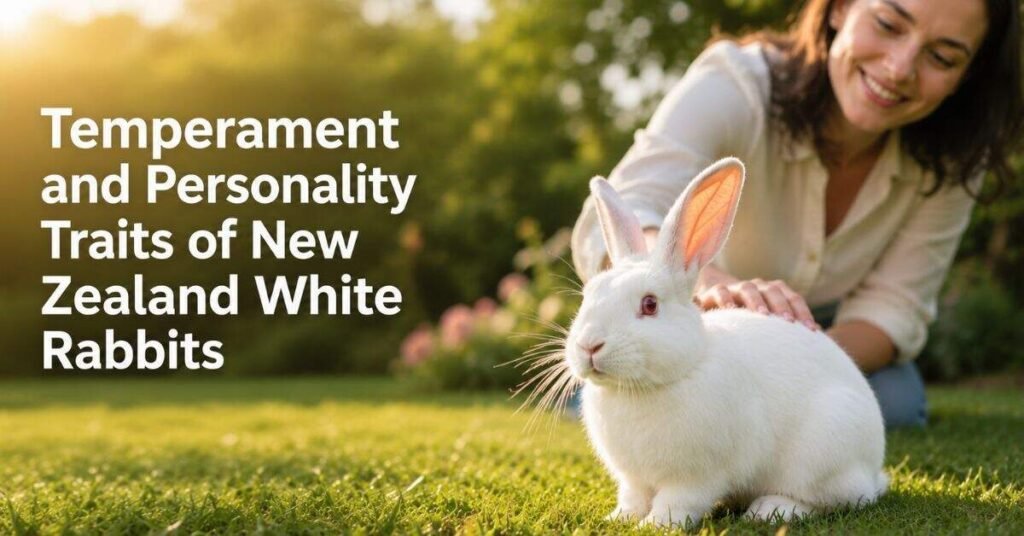
Many pet owners appreciate the New Zealand White rabbit for its calm and friendly temperament. Unlike some rabbit breeds that can be shy or nervous, this breed often responds well to gentle handling and regular interaction. Additionally, it adapts well to different home environments, making it an excellent choice for many households. Therefore, first-time rabbit owners often find it easier to build trust and form a strong bond with this rabbit.
Beyond its gentle nature, the New Zealand White rabbit is also curious and intelligent. Meanwhile, it enjoys exploring safe spaces, playing with toys, and following daily routines. Furthermore, regular attention helps strengthen the relationship between the rabbit and its owner. As a result, these rabbits often become affectionate companions that enjoy spending time with their human family.
| Personality Trait | Description | Benefit for Owners |
| Friendly | Enjoys human interaction | Easier to bond with |
| Calm | Relaxed and easygoing | Suitable for beginners |
| Gentle | Handles attention well | Good for families |
| Curious | Likes exploring | Makes playtime enjoyable |
| Intelligent | Learns routines quickly | Easier to train |
| Social | Enjoys companionship | Builds strong relationships |
| Adaptable | Adjusts well to environments | Fits many households |
| Affectionate | Forms attachments to owners | Rewarding companionship |
| Playful | Enjoys toys and activities | Encourages interaction |
| Active | Needs daily exercise | Supports healthy habits |
| Loyal | Recognizes owners | Strengthens the bond |
| Family-Friendly | Thrives in caring homes | Suitable for families |
Are New Zealand White Rabbits Good for Beginners?
For many first-time rabbit owners, the New Zealand White rabbit is an excellent choice. Its calm temperament and friendly nature make it easier to handle than some more nervous breeds. In addition, these rabbits often adapt well to new environments when given proper care and patience. Therefore, beginners can usually build trust with them without too much difficulty.
Another advantage is that New Zealand White rabbits have relatively simple care requirements. Meanwhile, their short coat requires less grooming than long-haired rabbit breeds. Furthermore, they tend to enjoy human interaction and can learn daily routines over time. As a result, new owners often find them rewarding pets that are both manageable and enjoyable to care for. However, like all rabbits, they still need proper housing, nutrition, exercise, and regular health checks to thrive.
Housing Requirements for a Happy and Comfortable Rabbit

Providing proper housing is essential for a New Zealand White rabbit’s health and happiness. Because this breed is larger than many other rabbits, it needs a spacious enclosure that allows free movement, stretching, and resting. In addition, the habitat should be clean, dry, and well-ventilated to reduce the risk of health problems. Therefore, a secure and comfortable living space plays an important role in supporting your rabbit’s overall well-being.
Comfort and safety should always be priorities when setting up a rabbit enclosure. Meanwhile, soft flooring helps protect sensitive feet from irritation and injury. Furthermore, rabbits need constant access to fresh water, hay, a litter box, and a secure hiding area. Regular cleaning is equally important because it helps maintain hygiene and control odors. As a result, a well-designed habitat can help your rabbit feel relaxed, safe, and comfortable every day.
| Housing Feature | Purpose | Benefit |
| Large Exercise Pen | Room for movement | Supports physical activity |
| Spacious Enclosure | Main living area | Ensures comfort and safety |
| Soft Flooring Mats | Protects feet | Reduces sore hocks |
| Litter Box | Bathroom area | Maintains cleanliness |
| Hay Rack | Holds fresh hay | Keeps food clean |
| Water Bowl or Bottle | Provides hydration | Supports overall health |
| Hideout House | Secure resting place | Reduces stress |
| Cardboard Tunnel | Encourages exploration | Provides enrichment |
| Chew Toys | Supports dental health | Prevents boredom |
| Proper Ventilation | Improves airflow | Reduces respiratory risks |
| Secure Fencing | Prevents escapes | Increases safety |
| Clean Bedding | Provides comfort | Maintains hygiene |
Ideal Cage Size and Living Environment
Since New Zealand White rabbits are a large breed, they need more living space than smaller rabbits. A cage should be large enough for the rabbit to stand upright, stretch fully, and hop comfortably. In addition, daily access to a larger exercise area is essential for both physical and mental well-being. Limited space can lead to boredom and inactivity. Therefore, providing a spacious enclosure is one of the best ways to keep your rabbit healthy and active.
It is equally important to create a safe and comfortable environment. Meanwhile, the enclosure should be placed in a quiet location away from direct sunlight, drafts, and loud noises. Furthermore, soft flooring, clean bedding, and proper ventilation help maintain comfort throughout the year. Fresh water, hay, and a secure hiding spot should always be available. As a result, a well-planned habitat helps your rabbit feel safe, relaxed, and secure.
| Housing Element | Recommendation | Benefit |
| Minimum Cage Length | 4–6 feet | Allows movement and stretching |
| Minimum Cage Width | 2–3 feet | Provides adequate space |
| Exercise Pen | Large play area | Encourages activity |
| Flooring Type | Solid surface with mats | Protects sensitive feet |
| Ventilation | Good airflow | Supports respiratory health |
| Hideout Box | Secure shelter | Reduces stress |
| Water Source | Heavy bowl or bottle | Provides hydration |
| Litter Box | Large and accessible | Supports litter training |
| Chew Toys | Rabbit-safe toys | Prevents boredom |
| Exercise Time | Several hours daily | Promotes fitness |
Feeding a New Zealand White Rabbit the Right Diet

Proper nutrition is one of the most important parts of caring for a New Zealand White rabbit. Because this breed is large and active, it needs a balanced diet to maintain good health. Fresh hay should make up the majority of daily food intake, as it supports digestion and helps keep teeth worn down naturally. In addition, fresh leafy greens provide important vitamins and minerals. Therefore, a well-planned diet can help your rabbit stay healthy, energetic, and maintain a healthy weight.
Along with hay and greens, a small amount of high-quality rabbit pellets can be offered each day. Meanwhile, fresh water should always be available and replaced regularly. Furthermore, treats such as fruits should only be given in moderation because they contain natural sugars. Sudden changes in diet should also be avoided, as they can upset a rabbit’s sensitive digestive system. As a result, consistent feeding habits can support long-term health and reduce the risk of common digestive problems.
Key Parts of a Healthy Rabbit Diet
- Unlimited fresh hay (Timothy hay is ideal for most adult rabbits)
- Fresh leafy greens every day
- Measured portions of high-quality rabbit pellets
- Clean, fresh water available at all times
- Small amounts of healthy treats on occasion
Daily Hay, Pellets, and Fresh Vegetables
Fresh hay should form the foundation of a New Zealand White rabbit’s daily diet. Since rabbits have sensitive digestive systems, they require a constant supply of fiber to maintain healthy digestion. Timothy hay is a popular choice for adult rabbits because it supports both gut and dental health. In addition, chewing hay helps wear down continuously growing teeth. Therefore, fresh hay should always be available throughout the day.
Along with hay, rabbits benefit from a measured portion of high-fiber pellets and a variety of fresh vegetables. Meanwhile, leafy greens provide important vitamins, minerals, and hydration. Furthermore, offering a variety of rabbit-safe vegetables adds variety and encourages healthy eating habits. Pellets should be fed in moderation because excessive amounts may contribute to weight gain. As a result, a balanced diet helps keep your rabbit active, healthy, and properly nourished.
| Food Type | Examples | Main Benefits | Feeding Recommendation |
| Timothy Hay | Fresh Timothy hay | High fiber, supports digestion | Unlimited daily |
| Orchard Grass Hay | Orchard grass | Good fiber source | Unlimited daily |
| Rabbit Pellets | High-fiber pellets | Balanced nutrition | Small daily amount |
| Romaine Lettuce | Romaine leaves | Hydration and nutrients | Daily |
| Green Leaf Lettuce | Leafy greens | Easy to digest | Daily |
| Cilantro | Fresh herb | Rich in nutrients | Several times weekly |
| Bell Pepper | Red, yellow, green | Vitamin C source | Several times weekly |
| Fresh Water | Clean drinking water | Essential hydration | Available at all times |
Foods to Avoid for Better Rabbit Health
Certain foods can be harmful to a New Zealand White rabbit, even if they seem safe at first. Because rabbits have delicate digestive systems, unhealthy foods may cause stomach problems, obesity, or more serious health issues. In addition, some foods contain substances that are toxic to rabbits and should never be offered. Therefore, knowing what to avoid is just as important as knowing what to feed.
Many human snacks and processed foods are unsuitable for rabbits. Meanwhile, foods that are high in sugar, fat, or starch can upset the balance of healthy gut bacteria. Furthermore, some fruits and vegetables should only be given in small amounts or avoided completely. As a result, sticking to hay, fresh greens, and quality pellets is the safest way to support long-term rabbit health.
Foods That Should Never Be Fed to Rabbits
- Chocolate
- Avocado
- Onions
- Garlic
- Leeks
- Chives
- Rhubarb
- Raw potatoes
- Processed snack foods
- Sugary cereals
- Candy and sweets
Common Health Issues and Preventive Care

Like all rabbit breeds, New Zealand White rabbits can develop certain health problems throughout their lives. Common concerns include digestive stasis, dental issues, obesity, respiratory infections, and parasite infestations. In addition, rabbits often hide signs of illness, making early detection challenging. Therefore, owners should monitor changes in appetite, behavior, energy levels, and droppings. Quick attention to unusual symptoms can help prevent minor problems from becoming serious health conditions.
Preventive care is essential for maintaining long-term health. Meanwhile, a diet rich in hay supports healthy digestion and proper tooth wear. Furthermore, clean housing, regular grooming, and routine veterinary checkups can reduce the risk of many common illnesses. Daily exercise is equally important because it helps prevent obesity and promotes overall well-being. As a result, consistent care can improve your rabbit’s quality of life and support a longer, healthier lifespan.
| Health Issue | Common Signs | Prevention Tips |
| GI Stasis | Reduced appetite, fewer droppings | Provide unlimited hay |
| Overgrown Teeth | Drooling, difficulty eating | Offer hay and chew toys |
| Obesity | Weight gain, inactivity | Balanced diet and exercise |
| Respiratory Infections | Sneezing, nasal discharge | Clean, ventilated habitat |
| Ear Mites | Ear scratching, head shaking | Regular ear checks |
| Sore Hocks | Red or irritated feet | Soft flooring and bedding |
| Hairballs | Digestive issues | Regular grooming |
| Heat Stress | Rapid breathing, weakness | Keep rabbits cool |
| Urinary Issues | Straining, discomfort | Encourage hydration |
| Arthritis | Stiff movement | Soft bedding and veterinary care |
Signs of Illness Every Owner Should Recognize
Because rabbits naturally hide weakness, even small changes in behavior can be important warning signs. A healthy New Zealand White rabbit is usually active, alert, and interested in food. However, a rabbit that suddenly stops eating or becomes unusually quiet may be experiencing a health problem. In addition, changes in droppings, posture, or grooming habits should never be ignored. Therefore, learning to recognize early signs of illness can help owners seek veterinary care before a condition becomes more serious.
Careful observation is one of the best ways to protect your rabbit’s health. Meanwhile, checking your rabbit daily allows you to notice unusual symptoms quickly. Furthermore, prompt treatment often leads to better outcomes and a faster recovery. Delaying veterinary attention can sometimes allow minor problems to become serious emergencies. As a result, every rabbit owner should know the common signs that may indicate illness.
Common Signs of Illness in Rabbits
- Loss of appetite or refusal to eat
- Reduced or absent droppings
- Unusual weight loss
- Low energy or lethargy
- Hiding more than usual
- Difficulty breathing or rapid breathing
- Sneezing or nasal discharge
- Watery, swollen, or irritated eyes
- Drooling or wet fur around the mouth
- Difficulty chewing food
- Diarrhea or very soft stools
- Head tilting or loss of balance
- Excessive scratching or ear shaking
- Hair loss or skin irritation
- Limping or difficulty moving
- Unusual aggression or behavior changes
Importance of Regular Veterinary Checkups
Regular veterinary checkups are an important part of keeping a New Zealand White rabbit healthy. A rabbit’s illness is often hidden until it becomes severe, unlike dogs and cats. Therefore, routine exams can help detect health problems before they become difficult to treat. In addition, a veterinarian can monitor your rabbit’s weight, teeth, ears, eyes, and overall condition. A higher quality of life and better treatment outcomes are often associated with early detection.
Preventive care can also reduce the risk of common rabbit health issues. Meanwhile, veterinarians can provide guidance on nutrition, grooming, housing, and proper exercise. Furthermore, regular visits allow owners to discuss any changes in behavior or eating habits. Professional advice can be especially helpful for first-time rabbit owners. As a result, scheduling routine checkups helps ensure your New Zealand White rabbit remains healthy, comfortable, and active throughout its life.
Exercise Needs and Enrichment Activities
Regular exercise is essential for the health and happiness of a New Zealand White rabbit. Since this breed is large and active, it needs daily opportunities to move around outside its enclosure. In addition, exercise helps maintain a healthy weight and supports strong muscles and joints. A rabbit that gets enough activity is also less likely to become bored or develop unwanted behaviors. Therefore, providing a safe space for running, hopping, and exploring should be part of every rabbit care routine.
For overall well-being, mental stimulation is equally important. Meanwhile, enrichment activities encourage natural behaviors such as chewing, digging, and foraging. Furthermore, interactive toys and play areas can keep rabbits engaged throughout the day. Changing toys regularly can also help maintain their interest. As a result, a combination of exercise and enrichment can improve both physical health and emotional well-being.
| Activity or Enrichment Item | Purpose | Benefits |
| Daily Free-Roam Time | Encourages movement | Improves fitness and health |
| Exercise Pen | Provides a safe play area | Allows exploration |
| Cardboard Tunnels | Supports natural hiding instincts | Reduces boredom |
| Digging Box | Encourages digging behavior | Provides mental stimulation |
| Willow Balls | Safe chewing activity | Supports dental health |
| Hay-Filled Toys | Combines food and play | Encourages foraging |
| Puzzle Feeders | Challenges problem-solving skills | Keeps the mind active |
| Cardboard Boxes | Creates hiding and climbing spaces | Encourages exploration |
| Wooden Chew Toys | Satisfies chewing needs | Prevents destructive chewing |
| Foraging Mats | Makes feeding more engaging | Supports instincts |
| Stacking Cups | Interactive play activity | Builds curiosity |
| Low Platforms | Adds climbing opportunities | Improves coordination |
| Hideout Houses | Provides security | Helps reduce stress |
| Paper Bags (Ink-Free) | Safe exploration item | Adds variety to playtime |
| Obstacle Courses | Creates physical challenges | Increases activity levels |
| Training Sessions | Teaches simple behaviors | Strengthens the owner-rabbit bond |
| Rotating Toys | Prevents boredom | Maintains interest |
| Supervised Outdoor Time | Introduces new experiences | Enhances enrichment |
| Social Interaction | Encourages companionship | Supports emotional health |
| Rabbit-Proofed Room Exploration | Allows safe freedom | Promotes confidence and exercise |
Preventing Boredom Through Mental Stimulation
Keeping a New Zealand White rabbit mentally active is just as important as providing physical exercise. Without enough stimulation, rabbits may become bored and develop unwanted behaviors such as excessive chewing or digging. In addition, mental challenges help satisfy their natural curiosity and encourage healthy activity. Therefore, offering a variety of enrichment opportunities can improve your rabbit’s overall well-being and happiness.
Different activities can keep your rabbit interested throughout the day. Meanwhile, changing toys and play areas regularly can make the environment feel new and exciting. Furthermore, simple enrichment activities often encourage natural behaviors like exploring, foraging, and problem-solving. As a result, mentally stimulated rabbits are usually more confident, active, and content in their daily lives.
Ways to Provide Mental Stimulation
- Hide small amounts of hay in different locations
- Use puzzle feeders for treats
- Provide cardboard tunnels for exploration
- Offer safe chew toys and willow balls
- Shredded paper can be used to create a digging box
- Rotate toys every few weeks
- Set up simple obstacle courses
- Give access to cardboard boxes and hideouts
- Encourage supervised exploration in rabbit-proofed areas
- Spend time interacting and playing with your rabbit
Essential Care Tips for First-Time Rabbit Owners
Caring for a New Zealand White rabbit becomes much easier when you understand its basic needs. Before bringing your rabbit home, prepare a safe living space with enough room to move and rest comfortably. In addition, provide unlimited hay, fresh water, and a balanced diet to support good health. Gentle handling is also important because rabbits can become frightened by sudden movements. Therefore, patience and consistency can help your new pet feel secure and relaxed.
Daily care involves more than feeding and cleaning. Meanwhile, regular exercise helps rabbits stay active and maintain a healthy weight. Furthermore, spending time with your rabbit each day can strengthen your bond and build trust. Paying attention to changes in behavior, appetite, or energy levels is equally important. As a result, first-time owners who follow a routine and stay observant can provide a happy, healthy, and comfortable life for their rabbit.
Conclusion
Choosing a New Zealand White rabbit can be a wonderful decision for many pet lovers. With its gentle temperament and friendly personality, this breed often fits well into family life. In addition, its adaptable nature makes it suitable for both new and experienced rabbit owners. Therefore, providing the right care from the beginning can help your rabbit thrive.
Proper housing, a balanced diet, and regular exercise are the foundations of good rabbit care. Meanwhile, routine grooming and veterinary checkups can help prevent many common health problems. Furthermore, a clean and safe environment allows rabbits to feel secure and comfortable. As a result, these simple habits can support a longer and healthier life.
It takes time and patience to build a strong bond with your rabbit. Rather than rushing interactions, allow your rabbit to gain confidence at its own pace. In addition, daily attention and positive experiences can strengthen trust over time. Consequently, many New Zealand White rabbits become affectionate and enjoyable companions.
Every rabbit is unique and deserves thoughtful care. Moreover, learning about your pet’s needs can make ownership more rewarding and less stressful. By following the tips in this guide, you can create a happy home for your New Zealand White rabbit. Ultimately, your efforts will help your rabbit enjoy a safe, healthy, and fulfilling life.
Frequently Asked Questions
1. How big does a New Zealand White rabbit get?
Most New Zealand White rabbits grow into a large breed. Adults typically weigh between 9 and 12 pounds when fully grown. In addition, they have a strong and muscular body structure. Therefore, they need more living space than many smaller rabbit breeds.
2. What is the lifespan of a New Zealand White rabbit?
With proper care, a New Zealand White rabbit can live for 7 to 10 years. However, some rabbits may live even longer when given a healthy diet and regular veterinary care. Furthermore, daily exercise and a clean environment can support long-term health. As a result, good care can significantly improve life expectancy.
3. Are New Zealand White rabbits friendly pets?
Many owners consider New Zealand White rabbits to be friendly and easygoing pets. In addition, they often enjoy gentle interaction and can form strong bonds with their families. Meanwhile, early socialization helps them become more comfortable around people. Consequently, they are a popular choice for first-time rabbit owners.
4. What should a New Zealand White rabbit eat every day?
A healthy diet should mainly consist of fresh hay. Along with hay, rabbits need leafy greens, a small portion of quality pellets, and constant access to clean water. In addition, healthy treats should only be consumed in moderation. Therefore, a balanced diet is essential for good digestion and overall health.
5. How much exercise does a New Zealand White rabbit need?
Daily exercise is important for both physical and mental well-being. Rather than staying in an enclosure all day, rabbits should have several hours of supervised activity in a safe area. In addition, enrichment toys can help keep them engaged. As a result, regular exercise supports a healthy weight and prevents boredom.
