


Introduction
White rabbits have beautiful white fur and are gentle creatures. Many people choose a white rabbit as a pet because it looks attractive and can form a close bond with its owner. White rabbits come in different breeds, sizes, and personalities, but they all need proper care to stay healthy and happy.
Thinking about bringing a white rabbit home? These adorable pets may look easy to care for, but they have specific needs that every owner should understand. Knowing how to meet those needs can make a big difference in your rabbit’s health and quality of life.
A complete guide to white rabbit care will help new owners get started. You will discover what to feed your rabbit, how to create a safe living space, and how to keep it healthy. By understanding these important topics, you can give your white rabbit a comfortable and happy life.
Understanding White Rabbits and Their Unique Characteristics

White rabbits are known for their soft white fur, gentle nature, and attractive appearance. Many rabbit breeds can have a white coat, including the New Zealand White Rabbit and other popular varieties. In addition, their bright eyes and clean-looking fur make them a favourite choice among pet owners. These rabbits are usually calm, friendly, and easy to handle when treated with care. As a result, they can form strong bonds with people and enjoy regular interaction. Proper socialization from a young age also helps them become more confident and comfortable around humans.
Besides their beautiful appearance, white rabbits have unique care needs. For example, their white fur may show dirt more easily than darker-colored rabbits. Therefore, regular grooming helps keep their coat clean and healthy. Meanwhile, they need a balanced diet, daily exercise, and a safe living space to stay happy. Unlike some small pets, rabbits are highly social animals and enjoy companionship. Consequently, providing attention and mental stimulation is important for their well-being. Understanding these characteristics can help owners create a healthy and comfortable environment for their rabbits.
| Characteristic | Description |
| Coat Color | Pure white fur |
| Temperament | Gentle and friendly |
| Social Behavior | Enjoys interaction and companionship |
| Grooming Needs | Regular brushing recommended |
| Activity Level | Moderate and playful |
| Living Environment | Clean, spacious, and safe housing |
| Diet | Hay, fresh vegetables, and clean water |
| Trainability | Can learn routines and litter habits |
| Lifespan | Typically 5–12 years, depending on care |
| Special Care | Monitor coat cleanliness and overall health |
Common White Rabbit Breeds and Their Differences
Many rabbit breeds have beautiful white coats, but they differ in size, personality, and care needs. For example, the New Zealand White is calm and large, while the Florida White is smaller and easier to manage. Some breeds are active and playful, whereas others are more relaxed.
Although appearance is important, breed traits matter just as much. Larger rabbits need more space, while smaller breeds may suit apartments better. Grooming and care requirements can also vary. Understanding these differences helps you choose a white rabbit that fits your lifestyle and home.
| White Rabbit Breed | Average Weight | Size | Personality | Grooming Needs | Lifespan | Best For |
| New Zealand White | 9–12 lbs | Large | Calm, friendly, gentle | Low to Moderate | 7–10 years | Families and first-time owners |
| Florida White | 4–6 lbs | Small | Curious, active, social | Low | 5–8 years | Small homes and apartments |
| White Netherland Dwarf | 2–3 lbs | Very Small | Energetic, playful | Low | 7–10 years | Experienced rabbit owners |
| White Mini Rex | 3.5–4.5 lbs | Small | Friendly, relaxed | Low | 8–12 years | Families and children |
| White Lionhead | 2.5–4 lbs | Small | Affectionate, lively | Moderate to High | 7–10 years | Owners who enjoy grooming |
| White Polish Rabbit | 2.5–3.5 lbs | Small | Gentle, alert | Low | 5–8 years | Indoor pet owners |
| White English Angora | 5–7 lbs | Medium | Calm, sweet | High | 7–12 years | Experienced rabbit keepers |
| White Satin Rabbit | 8–11 lbs | Large | Friendly, easygoing | Low to Moderate | 8–10 years | Families with space |
| White Dwarf Hotot | 2.5–3.5 lbs | Small | Curious, active | Low | 7–10 years | Beginners and apartment living |
| White Himalayan Rabbit | 2.5–5 lbs | Small to Medium | Quiet, gentle | Low | 5–8 years | Owners seeking a calm pet |
Choosing the Right Home Setup for a Pet Rabbit

Creating a safe and comfortable home is one of the most important parts of rabbit care. First, your rabbit needs enough space to hop, stretch, and explore every day. A small cage alone is usually not enough. Instead, many owners use a large pen or a rabbit-proofed room. In addition, the living area should stay clean, dry, and well-ventilated. This helps your rabbit feel secure and reduces the risk of health problems.
Proper placement of the habitat also makes a big difference. For example, rabbits should live in a quiet area away from direct sunlight and strong drafts. Meanwhile, soft bedding, a litter box, food bowls, and fresh water should always be available. Furthermore, adding tunnels, chew toys, and hiding spots can keep your rabbit active and mentally stimulated. As a result, a well-designed home setup helps your rabbit stay happy, healthy, and comfortable every day.
Essential Supplies Every New Owner Should Have
Before bringing a rabbit home, it is important to gather a few basic supplies. A spacious enclosure or exercise pen should be at the top of the list. In addition, your rabbit will need a litter box, food bowl, hay rack, and water bottle or water bowl. Soft bedding can provide extra comfort, while high-quality hay should always be available. Therefore, having these essentials ready helps your rabbit settle into its new home more easily.
Beyond the basics, a few extra items can improve your rabbit’s daily life. For example, chew toys help keep teeth healthy and prevent boredom. Likewise, tunnels and hideouts give rabbits a safe place to rest and explore. Furthermore, a grooming brush is useful for removing loose fur and keeping the coat clean. As a result, these supplies support both your rabbit’s physical health and emotional well-being from the very beginning.
Creating a Safe and Comfortable Living Space
A rabbit feels happiest when its living area is safe, comfortable, and free from stress. First, choose a quiet place away from loud noises, direct sunlight, and strong winds. In addition, provide enough room for hopping, stretching, and playing. Soft flooring helps protect sensitive feet, while a clean litter box keeps the space hygienic. Therefore, a well-designed habitat allows your rabbit to feel secure and relaxed every day.
Safety should always be a priority both inside and outside the enclosure. For example, keep electrical cords, toxic plants, and small objects out of reach. Meanwhile, hideouts and tunnels offer comfort and a private place to rest. Furthermore, regular cleaning reduces odors and lowers the risk of illness. As a result, a clean and secure environment supports your rabbit’s physical health and emotional well-being.
| Item | Purpose | Why It Is Important |
| Large Exercise Pen | Living and play space | Allows movement and exercise |
| Soft Flooring Mat | Protects feet | Prevents discomfort |
| Litter Box | Bathroom area | Keeps habitat clean |
| Paper-Based Litter | Absorbs waste | Reduces odors safely |
| Hay Rack | Holds fresh hay | Keeps hay clean |
| Food Bowl | Holds food | Supports feeding routine |
| Water Bowl or Bottle | Provides water | Prevents dehydration |
| Hideout House | Resting place | Reduces stress |
| Tunnels | Encourages exploration | Provides stimulation |
| Chew Toys | Supports dental health | Prevents unwanted chewing |
| Rabbit-Proof Barriers | Blocks unsafe areas | Improves safety |
| Grooming Brush | Removes loose fur | Maintains coat health |
| Emergency Carrier | Safe transport | Useful for vet visits |
Daily Feeding Requirements for a Healthy Rabbit
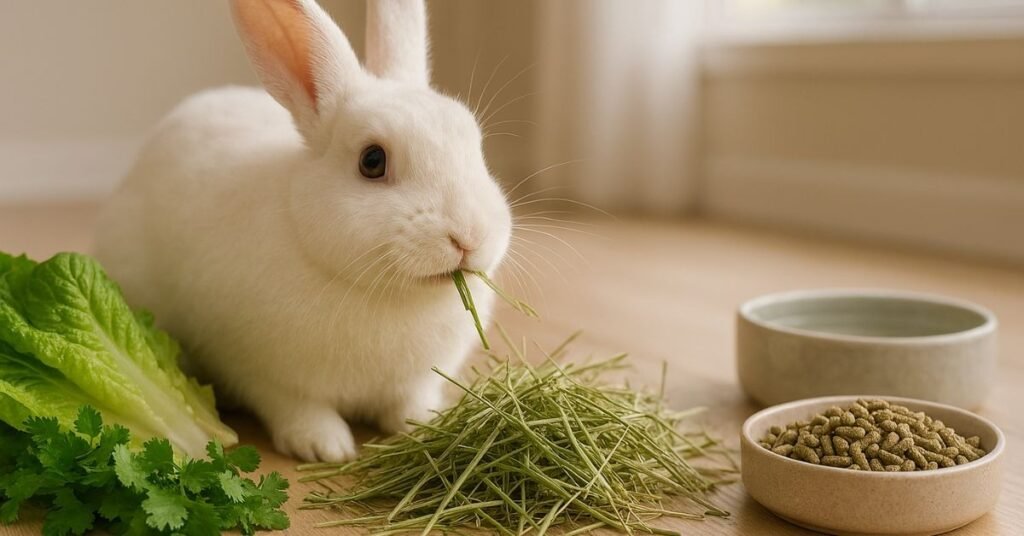
A balanced diet is essential for keeping a rabbit healthy and active. Fresh hay should make up most of the daily diet because it supports digestion and helps keep teeth worn down naturally. Rabbits also need a variety of fresh leafy greens, while a small amount of high-quality pellets can provide additional nutrients. A proper diet helps maintain a healthy weight and reduces digestive issues.
Fresh, clean water should always be available and replaced daily. Treats such as fruits can be offered occasionally, but only in small amounts due to their natural sugar content. Since rabbits have sensitive digestive systems, any new food should be introduced gradually. Following a consistent feeding routine helps support long-term health and comfort.
Essential Foods for a Rabbit’s Daily Diet
- Unlimited fresh hay (Timothy hay is a popular choice)
- Fresh leafy greens such as romaine lettuce, cilantro, and parsley
- A measured amount of high-quality rabbit pellets
- Clean, fresh drinking water at all times
- Small fruit treats are given occasionally in moderation
Best Hay, Pellets, and Fresh Greens to Offer
Hay should be the foundation of every rabbit’s diet and must be available at all times. Timothy hay is often the best choice for adult rabbits because it is rich in fiber and supports healthy digestion. In addition, chewing hay helps wear down continuously growing teeth and reduces the risk of dental problems. Other options, such as orchard grass and meadow hay, can provide variety while still meeting a rabbit’s nutritional needs. Although high-quality pellets contain important nutrients, they should only be fed in small amounts and should never replace hay as the primary food source.
Fresh greens are also an important part of a balanced diet. For example, romaine lettuce, cilantro, parsley, and bok choy provide valuable vitamins and minerals. Meanwhile, introducing new vegetables slowly helps prevent digestive upset. Furthermore, rotating different greens keeps meals interesting and encourages healthy eating habits. As a result, a combination of unlimited hay, limited pellets, and fresh vegetables supports healthy digestion, strong teeth, and overall well-being.
| Food Type | Examples | Benefits | Feeding Recommendation |
| Timothy Hay | Fresh Timothy hay | High fiber and dental support | Unlimited daily |
| Orchard Grass Hay | Orchard grass | Good fiber content | Unlimited daily |
| Meadow Hay | Mixed meadow grasses | Adds variety | Unlimited daily |
| Plain Rabbit Pellets | High-fiber pellets | Balanced nutrition | Small daily portion |
| Fresh Greens | Romaine, cilantro, parsley, bok choy | Vitamins and hydration | Daily in moderation |
| Bell Pepper | Red, yellow, or green pepper | Rich in vitamin C | Small portions weekly |
Foods That Can Harm Your Rabbit
Certain foods may seem harmless, but they can cause serious health problems for rabbits. Unlike humans, rabbits have very sensitive digestive systems. Therefore, feeding the wrong foods can lead to stomach upset, diarrhea, or other health issues. In addition, some foods contain substances that are toxic to rabbits. For this reason, owners should learn which foods to avoid before offering any new treats.
Sugary and processed foods are also a poor choice for rabbits. Meanwhile, foods that are high in starch or fat can disrupt healthy digestion. Furthermore, toxic vegetables and household foods should never be part of a rabbit’s diet. As a result, sticking to hay, fresh greens, and quality pellets is the safest way to support your rabbit’s health and well-being.
Foods to Avoid Feeding Rabbits
- Chocolate
- Avocado
- Onions
- Garlic
- Leeks
- Chives
- Raw potatoes
- Rhubarb
- Iceberg lettuce
- Bread
- Crackers
- Cookies
- Chips
- Candy
- Sugary cereals
- Processed snack foods
Grooming Tips to Keep the Coat Clean and Healthy

Regular grooming helps keep a rabbit’s coat clean, soft, and healthy. Although rabbits groom themselves frequently, they still need assistance from their owners, especially during shedding periods. White rabbits often show dirt and stains more easily, making routine brushing particularly important. Brushing two to three times per week helps remove loose fur and keeps the coat looking its best.
Grooming also includes checking the ears, nails, eyes, skin, and teeth. These routine inspections can help identify health problems before they become serious. In addition, maintaining a clean living space and supporting a healthy diet, good skin, and coat condition. Consistent grooming improves comfort, hygiene, and overall well-being.
| Grooming Task | Purpose | Recommended Frequency |
| Brushing Fur | Removes loose hair and dirt | 2–3 times per week |
| Daily Coat Check | Look for mats, stains, or skin issues | Daily |
| Nail Trimming | Prevents overgrown nails | Every 4–8 weeks |
| Ear Inspection | Checks for wax buildup or infection | Weekly |
| Eye Check | Look for discharge or irritation | Weekly |
| Fur Around Tail Check | Keeps the area clean | Several times per week |
| Shedding Season Brushing | Removes excess loose fur | Daily or every other day |
| Skin Inspection | Detects parasites or skin problems | Weekly |
| Cleaning Food Areas | Prevents fur from becoming dirty | Daily |
| Replacing Bedding | Maintains cleanliness and comfort | Several times per week |
| Litter Box Cleaning | Reduces odors and contamination | Daily |
| Checking Teeth | Monitors dental health | Monthly or during vet visits |
| Paw Inspection | Checks for sores or injuries | Weekly |
| Cleaning Water Bowls | Prevents bacterial growth | Daily |
| Veterinary Health Check | Supports overall health | At least once a year |
Managing Shedding and Basic Fur Care
Rabbits naturally shed their fur several times a year. During shedding periods, loose hair can collect on the coat and around the living area. Therefore, regular brushing is important for removing excess fur and keeping the coat clean. In addition, brushing helps reduce the amount of hair a rabbit may swallow while grooming itself. Gentle grooming sessions also provide an opportunity to check for skin problems, mats, or signs of irritation.
Good fur care goes beyond brushing alone. For example, keeping the habitat clean helps prevent dirt and debris from sticking to the coat. Meanwhile, a healthy diet with plenty of hay supports normal digestion and overall coat condition. Furthermore, fresh water and regular health checks contribute to healthy skin and fur. As a result, consistent grooming can help your rabbit stay comfortable and maintain a soft, healthy coat throughout the year.
| Fur Care Task | Purpose | Recommended Frequency |
| Brushing During Shedding | Removes loose fur | Daily or every other day |
| Regular Brushing | Keeps coat clean and smooth | 2–3 times per week |
| Checking for Mats | Prevents tangled fur | Weekly |
| Inspecting Skin | Detects irritation or parasites | Weekly |
| Cleaning Fur Around Tail | Maintains hygiene | Several times per week |
| Replacing Dirty Bedding | Reduces fur contamination | Weekly or as needed |
| Litter Box Cleaning | Keeps fur cleaner | Daily |
| Providing Unlimited Hay | Supports digestion during shedding | Daily |
| Fresh Water Supply | Supports coat condition | Daily |
| Vet Consultation for Excessive Hair Loss | Addresses health concerns | When necessary |
Building Trust and Strengthening Your Bond

Developing a strong relationship with your rabbit takes time and patience. At first, many rabbits may feel nervous in a new environment. Therefore, it is important to move slowly and allow your rabbit to approach you on its own terms. In addition, spending quiet time near your rabbit each day can help it feel safe and secure. Gradually, your pet will begin to recognize your voice, scent, and presence. As a result, trust can grow naturally over time.
Positive interactions are also important for building a lasting bond. For example, offering healthy treats by hand can encourage friendly behavior. Meanwhile, gentle petting and calm handling help your rabbit become more comfortable around people. Furthermore, regular playtime provides both exercise and opportunities for social connection. Consequently, a rabbit that feels loved and respected is more likely to become confident, affectionate, and relaxed around its owner.
Safe Handling Techniques for Beginners
Safe handling is an important part of rabbit care. Many new owners feel unsure at first, but patience and gentle movements help build trust. Before picking up your rabbit, make sure it is calm and comfortable. Always support both the chest and hindquarters to prevent injuries and reduce stress. Careful handling helps your rabbit feel safe and secure.
Proper techniques protect both the rabbit and the owner. Rabbits have powerful back legs and may kick when frightened. Holding your rabbit close to your body can provide stability and comfort. Start with short handling sessions and gradually increase the time as your rabbit becomes more confident. Consistent, respectful handling can strengthen your bond over time.
Safe Rabbit Handling Tips
- Move toward your rabbit slowly and avoid sudden movements.
- Allow your rabbit time to become familiar with your scent.
- Place one hand under the front part of the body for support.
- Use your other hand to support the back legs and lower body.
- Keep your rabbit secure against your chest while holding it.
- Start with brief handling sessions and gradually increase them.
- Lower your rabbit carefully when returning it to the ground.
- Watch for signs of stress, such as kicking or struggling.
- Offer a small rabbit-safe treat after positive interactions.
- Always supervise young children when handling rabbits.
Understanding Rabbit Body Language
Learning to read rabbit body language can help you understand how your pet feels. Unlike people, rabbits communicate mainly through their posture, movements, and behavior. For example, a rabbit that is lying down with its body stretched out is usually relaxed and comfortable. In addition, gentle tooth purring often shows contentment when being petted. Therefore, paying attention to these signals can help you build a stronger connection with your rabbit.
Fear, stress, and excitement can also be indicated by different behaviors. Meanwhile, a rabbit that thumps its back feet may be warning of danger or expressing frustration. Ears held upright often show alertness, while flattened ears can signal discomfort or fear. Furthermore, happy rabbits may perform small jumps and twists known as binkies. As a result, understanding these body language cues allows owners to respond appropriately and provide a safer, more comfortable environment for their pets.
Exercise, Playtime, and Mental Enrichment
Exercise and enrichment are essential for a rabbit’s physical and mental well-being. Rabbits need daily time outside their enclosure to run, hop, and explore. Regular activity helps maintain a healthy weight, strengthens muscles and joints, and reduces boredom. Providing a safe space for movement supports overall health and encourages natural behaviors.
Mental stimulation is equally important. Rabbits enjoy activities such as digging, chewing, foraging, and exploring new environments. Interactive toys, tunnels, and obstacle courses can keep them engaged and curious. Rotating toys and introducing new challenges from time to time helps prevent boredom and improves quality of life.
| Activity or Item | Purpose | Benefits |
| Free-Roam Exercise Time | Encourages movement | Improves fitness and health |
| Exercise Pen | Provides a safe play area | Allows exploration and activity |
| Cardboard Tunnels | Supports natural burrowing behavior | Reduces boredom |
| Chew Toys | Satisfies chewing instincts | Promotes dental health |
| Digging Box | Encourages digging | Provides mental stimulation |
| Treat Puzzle Toys | Rewards problem-solving | Keeps the mind active |
| Hideouts | Creates safe resting spaces | Reduces stress |
| Cardboard Boxes | Encourages exploration | Low-cost enrichment |
| Obstacle Courses | Adds physical challenges | Improves coordination |
| Stacking Cups | Interactive play activity | Encourages curiosity |
| Hay-Filled Toys | Combines food and play | Supports natural foraging |
| Rotating Toys | Prevents boredom | Keeps playtime interesting |
| Social Interaction | Strengthens bonding | Improves emotional well-being |
| Training Sessions | Teaches simple behaviors | Provides mental challenges |
| Safe Play Area | Allows freedom to move | Supports daily exercise needs |
Best Toys and Activities for Indoor Rabbits
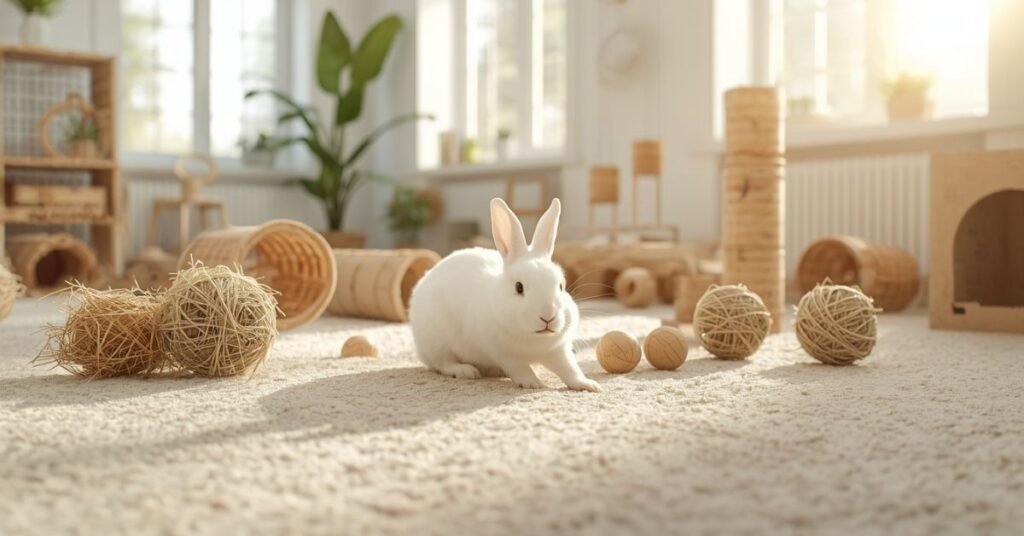
Indoor rabbits need regular play and enrichment to stay healthy and happy. Toys encourage natural behaviors such as chewing, digging, and exploring while helping prevent boredom. Items like cardboard tunnels, chew toys, and hay-filled balls provide both physical activity and mental stimulation. Offering a variety of safe toys keeps rabbits engaged and active throughout the day.
Interactive activities can also strengthen the bond between you and your rabbit. Supervised playtime in a rabbit-proofed area allows safe exploration and exercise. Rotating toys every few weeks keeps playtime fresh and exciting. Even simple household items can provide enrichment when used safely. Regular play helps indoor rabbits remain curious, confident, and content.
| Toy or Activity | Purpose | Benefits |
| Cardboard Tunnels | Encourages exploration | Provides exercise and fun |
| Chew Sticks | Supports natural chewing | Helps maintain healthy teeth |
| Hay-Filled Balls | Combines feeding and play | Encourages foraging |
| Puzzle Feeders | Rewards problem-solving | Provides mental stimulation |
| Digging Box | Allows digging behavior | Reduces boredom |
| Cardboard Boxes | Creates hiding spaces | Encourages exploration |
| Willow Balls | Safe chewing activity | Supports dental health |
| Paper Bags (Without Ink) | Safe investigation and play | Stimulates curiosity |
| Stacking Cups | Interactive tossing toy | Provides enrichment |
| Treat Hunt Games | Encourages searching | Increases activity levels |
| Low Ramps | Adds climbing opportunities | Improves coordination |
| Hideout Houses | Provides security | Reduces stress |
| Foraging Mats | Makes feeding engaging | Encourages instincts |
| Wooden Chew Toys | Safe chewing option | Prevents destructive chewing |
| Exercise Pen Playtime | Allows free movement | Supports physical fitness |
| Obstacle Courses | Creates fun challenges | Improves agility |
| Hanging Toys | Encourages interaction | Keeps rabbits entertained |
| Soft Tunnels | Cozy running space | Promotes exercise |
| Training Sessions | Teaches simple tricks | Builds confidence |
| Supervised Exploration Time | Introduces new experiences | Prevents boredom and stress |
Conclusion
Owning a white rabbit can be a rewarding experience for people of all ages. With proper care, these gentle pets can live happy and healthy lives. In addition, understanding their needs helps create a stronger relationship between the rabbit and the owner. Therefore, taking the time to learn about rabbit care is always worthwhile.
Providing a safe home, a balanced diet, and regular grooming is essential. Meanwhile, daily exercise and mental enrichment help keep rabbits active and content. Furthermore, paying attention to their behavior can help you notice potential health concerns early. As a result, your rabbit can enjoy a better quality of life.
Patience plays an important role when caring for a rabbit. Rather than expecting immediate trust, allow your rabbit to become comfortable at its own pace. In addition, gentle handling and positive interactions can strengthen your bond over time. Consequently, many rabbits become affectionate companions when treated with care and respect.
Every rabbit has its own personality and preferences. However, consistent care and attention can help any rabbit thrive. Moreover, small daily efforts often make a big difference in long-term health and happiness. By following the tips in this guide, you can give your white rabbit a safe, comfortable, and loving home for years to come.
Frequently Asked Questions
1. How much space does a white rabbit need?
A white rabbit needs enough room to hop, stretch, and play every day. Instead of staying in a small cage, rabbits do better in a large pen or rabbit-proofed area. In addition, daily exercise outside the enclosure is important. Therefore, providing plenty of space helps support both physical and mental health.
2. What should a white rabbit eat every day?
A healthy diet should consist mainly of fresh hay. Along with hay, rabbits need fresh leafy greens and a small amount of high-quality pellets. Furthermore, clean water should always be available. As a result, a balanced diet supports healthy digestion and strong teeth.
3. How often should a white rabbit be groomed?
Most white rabbits benefit from brushing several times each week. During shedding seasons, however, more frequent grooming may be necessary. In addition, regular grooming helps remove loose fur and keeps the coat clean. Consequently, it can also reduce the risk of hair-related digestive problems.
4. How can I build trust with my white rabbit?
Building trust takes patience and consistency. Rather than forcing interaction, allow your rabbit to approach you on its own. Meanwhile, offering healthy treats and spending quiet time together can help. Over time, your rabbit will become more comfortable and confident around you.
5. What are common signs that a white rabbit is happy?
Happy rabbits often display relaxed and playful behaviors. For example, they may perform binkies, stretch out while resting, or gently grind their teeth when content. Moreover, curious exploration is another positive sign. Therefore, understanding these behaviors can help you better recognize your rabbit’s emotions.
