

Introduction
Rabbits are small animals that live on land. They have soft fur and strong back legs for jumping and running. Many people wonder, can rabbits swim? The simple answer is yes, rabbits can swim if they must. Swimming is not their natural habit, but their bodies allow them to move in water when needed.
But just because rabbits can swim does not mean they enjoy it. In fact, most rabbits feel scared in water. It can cause stress and even harm their health. This makes many rabbit owners curious and concerned. Should you ever let your rabbit go near water? Is it safe or risky?
In this guide, we will explain everything in a simple way. You will learn if rabbits should swim, the dangers of water, and how to keep your pet safe. This will help you understand your rabbit better and care for it the right way.
Can Rabbits Swim?
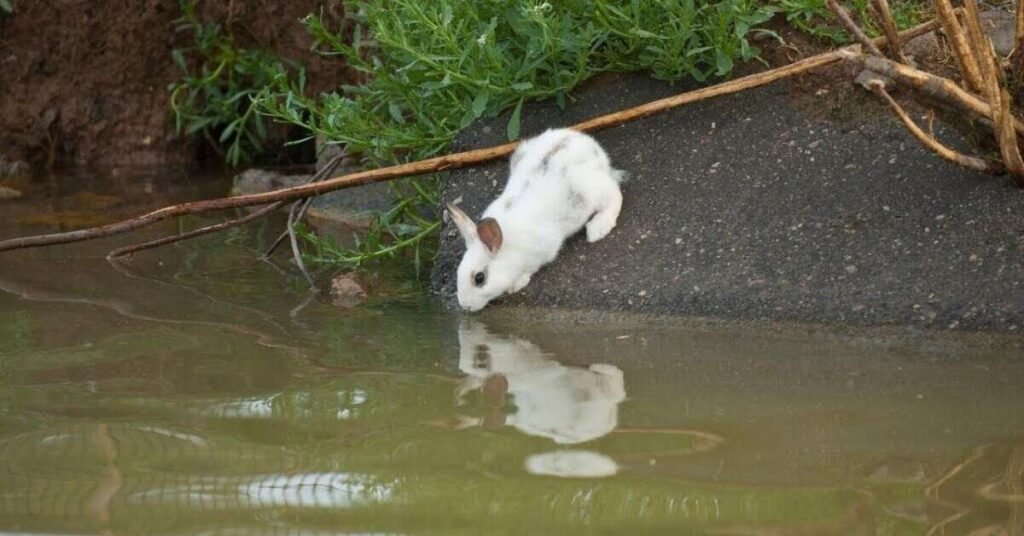
Yes, rabbits can swim if they need to. Their bodies are strong, and their legs can move in water. This helps them stay afloat for a short time. In the wild, a rabbit may swim to escape danger. So, the answer to “can rabbits swim” is yes, but only in rare situations.
However, swimming is not natural for rabbits. Most rabbits feel scared in water. It can cause stress and make them panic. Wet fur can also lead to health problems like cold or shock. So, even though rabbits can swim, it is not safe or good for them. It is always better to keep your rabbit dry and comfortable.
Do Rabbits Naturally Know How to Swim?
Rabbits are not natural swimmers like some other animals. They are land animals that feel safe on dry ground. Rabbits do not learn swimming from their parents or practice it in daily life. Still, if a rabbit falls into water, its body may react and start moving the legs. This can help it stay afloat for a short time.
But this does not mean rabbits are comfortable in water. Most rabbits feel fear and stress when they are wet. They may panic and struggle to get out quickly. Their main goal is to escape, not to swim. So, rabbits do not naturally know how to swim in a calm or safe way.
Why Swimming Is Not Natural for Pet Rabbits
Pet rabbits are land animals. They are built for running and jumping, not for swimming. Their bodies are not designed to stay in water for long. When a rabbit gets wet, its fur becomes heavy and cold. This makes it hard for the rabbit to move and stay warm. As a result, the rabbit can feel stress and fear very quickly.
Swimming can also be risky for pet rabbits. They may panic and try to escape in a hurry. This can lead to injury or even shock. Water can also cause health problems like hypothermia or skin issues. That is why swimming is not natural or safe for pet rabbits, and it is best to keep them dry.
Reasons why swimming is not natural for rabbits:
- They are not built for water activities
- Their fur holds water and becomes heavy
- They can get cold very quickly
- Swimming causes stress and panic
- It increases the risk of illness and injury
Is It Safe for Rabbits to Swim?
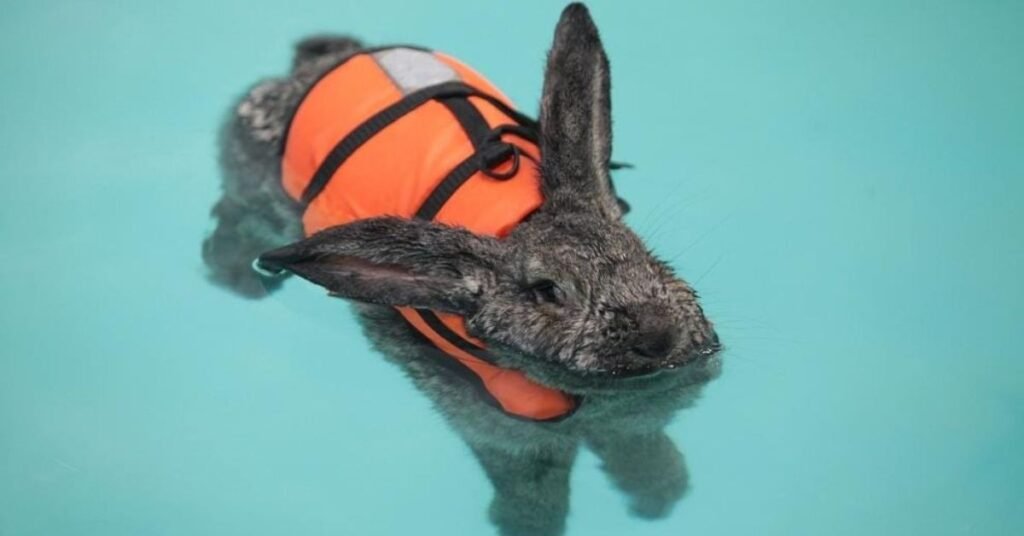
Swimming is not safe for rabbits in most cases. Even though they can move in water, it can harm them. Rabbits feel stress when they are placed in water. Their heart rate can rise, and they may panic quickly. This fear can lead to shock or serious health problems.
Water can also affect a rabbit’s body in a bad way. Their fur stays wet for a long time and makes them cold. This can cause illness like hypothermia. Rabbits can also slip or get hurt while trying to escape. So, it is always better to keep rabbits away from water.
Why swimming is not safe for rabbits:
- It causes stress and fear
- Wet fur makes them cold
- Risk of shock or illness
- They may panic and get injured
- Not a natural or comfortable activity
Risks of Swimming for Domestic Rabbits
Swimming can be very risky for domestic rabbits. They are not used to water, so they get scared quickly. When a rabbit is placed in water, it may panic and lose control. This can make it hard for the rabbit to stay safe. Their body can also get weak from stress and fear.
Wet fur is another big problem for rabbits. Their thick coat holds water and stays damp for a long time. This can make them very cold and sick. Rabbits can also slip or hurt themselves while trying to escape. Because of these risks, swimming is not a good idea for pet rabbits.
Common risks of swimming for rabbits:
- High stress and panic
- Risk of shock
- Wet fur causing cold and illness
- Difficulty moving in water
- Chance of injury while escaping
When Swimming Can Be Dangerous or Fatal
Swimming can become very dangerous for rabbits in many situations. If the water is too cold, the rabbit can quickly lose body heat. This can lead to hypothermia, which is life-threatening. Deep water is also risky because rabbits can get tired fast and may drown. If a rabbit is already weak or sick, swimming can make its condition worse very quickly.
Panic is another major danger. Rabbits do not stay calm in water. They may struggle hard and use up all their energy. This can lead to shock or even death. Wet fur also takes a long time to dry, which increases the risk of illness. So, even a short time in water can become fatal for a rabbit.
| Situation | Why It Is Dangerous | Possible Result |
| Cold water | Lowers body temperature quickly | Hypothermia |
| Deep water | Rabbit gets tired and cannot escape | Drowning |
| Sick or weak rabbit | Body cannot handle stress | Collapse or death |
| Long time in water | Fur stays wet and heavy | Illness or infection |
| Panic while swimming | Uses too much energy | Shock or exhaustion |
| No easy way to get out | Rabbit feels trapped | Injury or drowning |
| Dirty or contaminated water | Exposure to bacteria and germs | Skin or internal disease |
| Sudden water exposure | Causes extreme fear | Shock or heart problems |
Why Do Some Rabbits End Up in Water?
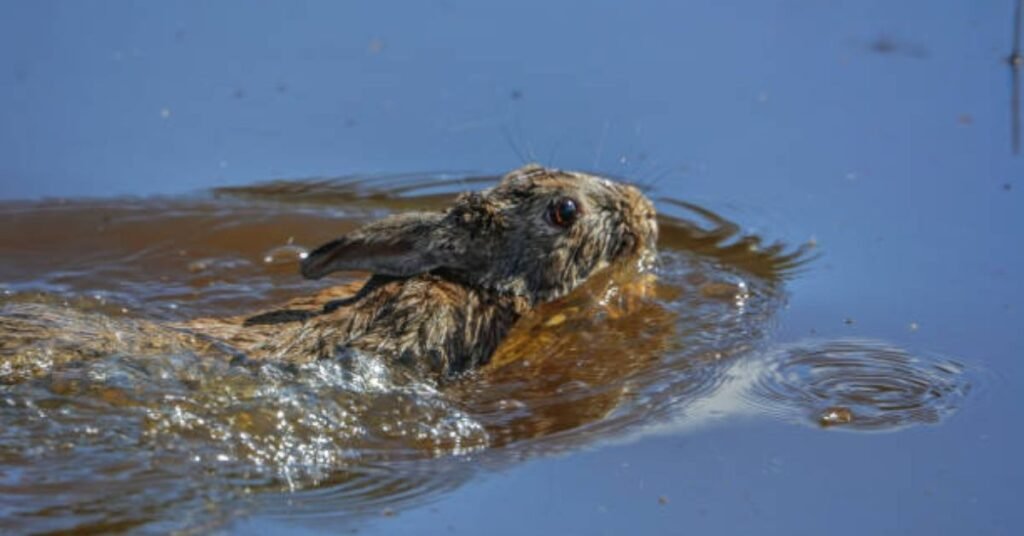
Some rabbits end up in water by accident. They may fall into a pool, pond, or bucket while exploring. Rabbits are curious animals, and they like to move around and check new places. If the area is not safe, they can slip and fall into water without knowing the danger. This can happen quickly and can be very scary for them.
In other cases, rabbits may go into water while trying to escape danger. In the wild, a rabbit might jump into water to avoid a predator. Pet rabbits may also run into water if they feel scared or stressed. Sometimes, owners may place rabbits in water for cleaning, which is not safe. These situations show why it is important to keep rabbits away from water and protect them from harm.
Wild Rabbits vs Domestic Rabbits Behavior
Wild rabbits and domestic rabbits behave differently. These rabbits live in forests, fields, and open areas. They are always alert and ready to run from danger. They may even jump into water if it helps them escape predators. Domestic rabbits live in homes and are safer, but they are more sensitive and easily scared. They are not used to survival situations like wild rabbits.
Domestic rabbits depend on humans for care and safety. They do not face natural dangers every day, so they react strongly to stress. Wild rabbits are more independent and stronger in survival skills. These differences also affect how they respond to water and danger.
| Behavior Area | Wild Rabbits | Domestic Rabbits |
| Living environment | Forests, fields, wild areas | Homes, cages, indoor spaces |
| Survival skills | Strong and highly alert | Limited survival instincts |
| Reaction to danger | Run fast or use escape routes | Panic easily |
| Water behavior | May swim to escape predators | Avoid water and get stressed |
| Human interaction | Avoid humans | Depend on humans for care |
| Stress level | Lower in natural environment | Higher in unfamiliar situations |
| Independence | Very independent | Fully dependent on owners |
Can Wild Rabbits Swim Better Than Pet Rabbits?
Wild rabbits may handle water slightly better than pet rabbits, but they are still not strong swimmers. In nature, a wild rabbit may enter water only to escape danger. They are more alert and faster in reactions, which helps them survive short moments in water. However, swimming is still not their natural skill.
Pet rabbits are more sensitive and less prepared for survival situations. They get stressed more quickly and may panic in water. Wild rabbits can sometimes stay calmer for a short time because of survival instincts, but neither type enjoys swimming. Both should be kept away from water for safety.
| Feature | Wild Rabbits | Pet Rabbits |
| Swimming ability | Slightly better in survival situations | Very limited ability |
| Water exposure | May enter water to escape danger | Rarely exposed to water |
| Stress response | More controlled in wild settings | High stress and panic quickly |
| Survival instinct | Strong and active | Weak in dangerous situations |
| Movement in water | Can paddle briefly if needed | Struggles more easily |
| Safety in water | Still at risk of drowning | High risk of shock and panic |
| Overall comfort | Uncomfortable but adaptable in nature | Very uncomfortable and fearful |
Survival Instincts in Wild Rabbits
Wild rabbits have strong survival instincts. They live in nature where danger is always present. Because of this, they are always alert and ready to run or hide. Their instincts help them escape predators and survive in tough conditions. These instincts also guide their quick reactions in emergencies.
In some situations, wild rabbits may even enter water to survive. They do this only when they have no other escape option. Their body reacts quickly, helping them move for a short time in water. Still, this is not safe or natural for them. It is only a last-resort survival action.
Key survival instincts in wild rabbits:
- Always alert and aware of danger
- Quick running and hiding skills
- Strong reaction to predators
- May use water as a last escape option
- High ability to adapt in the wild
Should You Let Your Rabbit Swim?
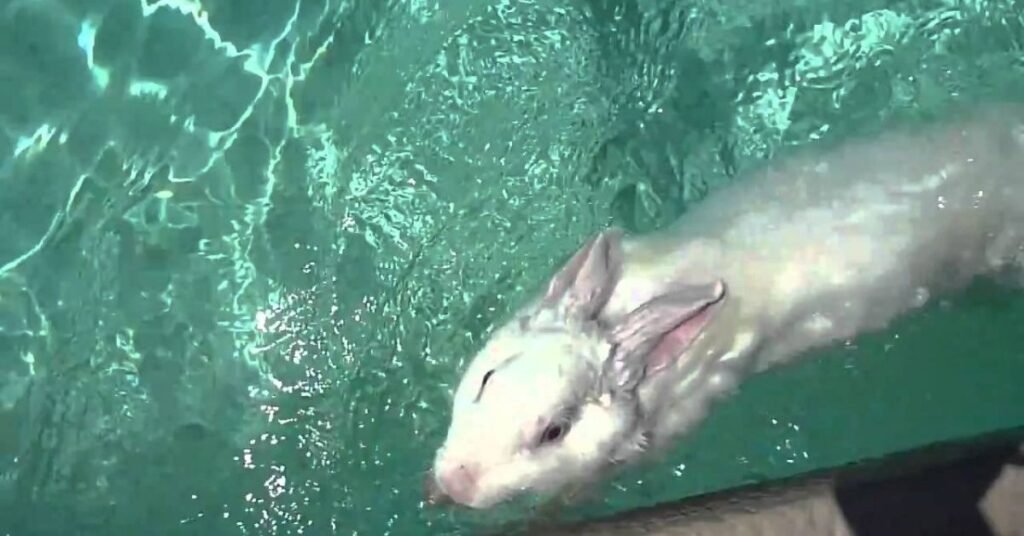
You should not let your rabbit swim. Even though rabbits can move in water, it is not safe for them. Swimming can cause fear, stress, and panic. Rabbits are land animals, and water is not part of their natural life. Keeping them away from water is the best choice for their safety.
Letting a rabbit swim can lead to serious health risks. Wet fur can make them cold very quickly. This may cause illness or even shock. Rabbits can also get injured while trying to escape water. So, it is always better to protect your rabbit and keep it dry and comfortable at all times.
Safe Alternatives to Keep Rabbits Cool
Keeping rabbits cool in hot weather is very important. Instead of using water or swimming, you should use safe and gentle methods. Rabbits can get heat stress easily, so their environment should always stay fresh and comfortable. Simple changes can help them stay cool without any risk.
There are many safe ways to lower a rabbit’s body temperature. These methods are easy and do not cause fear or stress. They help your rabbit stay healthy during hot days. Always make sure your rabbit has shade, fresh air, and clean water.
Safe ways to keep rabbits cool:
- Provide fresh and cool drinking water all the time
- Keep them in a shaded and airy place
- Use ceramic tiles or cool surfaces to lie on
- Place a frozen water bottle wrapped in cloth nearby
- Brush their fur regularly to remove extra heat
- Avoid direct sunlight and hot rooms
Conclusion
Rabbits are gentle animals that are not made for swimming. They can move in water for a short time, but it is not safe or natural for them. Most rabbits feel fear and stress when they are near water. This makes swimming a risky activity for them.
Even wild rabbits only enter water when they have no other choice. Pet rabbits are even more sensitive and can get scared very easily. Wet fur and cold water can quickly harm their health. This is why water should always be avoided unless it is necessary for safety or care.
As a rabbit owner, your main goal should be protection. Keeping your rabbit dry and comfortable is very important. A safe and calm environment helps your rabbit stay healthy and happy. Simple care can prevent many problems.
In the end, rabbits should never be encouraged to swim. It may look interesting, but it can be dangerous. Always choose safe alternatives to keep your rabbit cool and healthy. A little care goes a long way in keeping your pet safe.
FAQs
1. Can rabbits swim in water?
Yes, rabbits can swim for a short time if they need to. Their legs can move in water to help them stay afloat. But swimming is not natural or comfortable for them. Most rabbits feel scared in water, so it is not recommended.
2. Do rabbits like to swim?
No, most rabbits do not like swimming at all. Water makes them stressed and nervous. They prefer staying on dry ground where they feel safe. Swimming can be harmful to their health and comfort.
3. Can swimming harm rabbits?
Yes, swimming can harm rabbits in many ways. Wet fur can make them cold very quickly. This can lead to illness, shock, or even serious health problems. That is why water should be avoided.
4. What happens if a rabbit falls into water?
If a rabbit falls into water, it may panic and try to escape quickly. This can cause stress and exhaustion. In deep or cold water, it can become very dangerous. Immediate drying and care are very important.
5. Should pet rabbits ever be forced to swim?
No, pet rabbits should never be forced to swim. It can cause fear, injury, and serious stress. Rabbits are land animals and are not built for water. Keeping them dry is always the safest choice.
